Onan QG 2800
- Running Watts
- 2800W
- Fuel
- Gas
- Noise
- 70 dB(A) @ 10ft
- Weight
- 125 lbs
- Type
- Built-in
Generators
9 products compared · Specs verified from manufacturers + Amazon · October 2026
Onan has owned the built-in RV generator market for decades, but the lineup is confusing: QG, QD, numbers from 2500 to 8000, gas and diesel, built-in and portable. This guide compares all nine current Onan RV models on verified spec-sheet data so you can match the right generator to your RV. The short answer for most owners: the QG 5500 is the sweet spot for two-AC travel trailers and fifth wheels, diesel pusher owners want the QD 6000 or QD 8000, and the portable P4500i is the budget-friendly way to get Onan power without a permanent install.

Affiliate disclosure: RV Solar Power Guide is reader-supported. When you buy through links on this page, we may earn a commission at no extra cost to you. Our picks come from comparing verified specs and price. We don't accept payment for placement.
Top pick
Onan QG 5500: 5,500W, runs two ACs, 288 lbs, 69 dB(A) at 10 ft half load, 3-year warranty
Best diesel
Onan QD 6000: 6,000W liquid-cooled diesel for diesel motorhomes, 0.40 gal/hr at half load
Best portable
Onan P4500i: 3,700W running, remote start, TT-30R RV outlet, 18 hrs at 25% load
Key rule
Match generator fuel to your RV fuel. Gas RV = QG gasoline. Diesel pusher = QD diesel. Built-ins are dealer-sold and dealer-installed.
All nine models below are current Cummins Onan RV products. Specs come from Cummins spec sheets and authorized dealer listings. Built-in models (QG and QD series) are sold and installed through Cummins dealers; the portable P-series is sold at retail. Noise figures keep their published test conditions next to the number.
| Product | Running Watts | Fuel | Noise | Weight | Type | Buy |
|---|---|---|---|---|---|---|
| Entry built-inOnan QG 2800Read review ↓ | 2800W | Gas | 70 dB(A) @ 10ft | 125 lbs | Built-in | Find a Dealer |
| Onan QG 4000Read review ↓ | 4000W | Gas | 68 dBA @ 10ft | 172 lbs | Built-in | Find a Dealer |
| Top pickOnan QG 5500Read review ↓ | 5500W | Gas | 69 dB(A) @ 10ft | 288 lbs | Built-in | Find a Dealer |
| Onan QG 7000Read review ↓ | 7000W | Gas | 67 dBA @ 10ft | 290 lbs | Built-in | Find a Dealer |
| Onan QD 3200Read review ↓ | 3200W | Diesel | 68 dBA @ 10ft | 205 lbs | Built-in | Find a Dealer |
| Best dieselOnan QD 6000Read review ↓ | 6000W | Diesel | 65 dBA @ 10ft | 420 lbs | Built-in | Find a Dealer |
| Onan QD 8000Read review ↓ | 8000W | Diesel | 66 dBA @ 10ft | 420 lbs | Built-in | Find a Dealer |
| Onan P2500iRead review ↓ | 2200W | Gas | 52 dBA* | 48 lbs | Portable | See on Amazon |
| Best portableOnan P4500iRead review ↓ | 3700W | Gas | 52 dBA* | 98 lbs | Portable | See on Amazon |
* Distance/load not published for P-series portables. Built-in noise figures are at half load unless noted. Built-in Onan generators are dealer-sold; portables are available at retail.
Start with what you need to run. A truck camper or small travel trailer with a single 13,500 BTU air conditioner does well on a QG 2800 or QG 4000. Most fifth wheels and larger travel trailers running two air conditioners need a QG 5500 at minimum; heavy two-AC use with electric water heating points to the QG 7000. Diesel Class A motorhomes pair with the QD 6000 or QD 8000, which draw from the coach's main diesel tank so there is no second fuel to manage.
This is the simplest decision in the lineup. Gas motorhomes and towables use QG gasoline models that sip from the chassis fuel tank (with a pickup tube set so the generator cannot drain your driving fuel). Diesel pushers use QD models that share the coach's diesel supply. Diesel units cost more upfront but burn less fuel per hour (the QD 6000 uses about 0.40 gal/hr at half load versus 0.6 for the QG 5500) and typically run longer between major overhauls.
Built-in QG and QD models mount permanently in a ventilated compartment, start from a dash or wall switch, and integrate with an automatic transfer switch. They cost several thousand dollars installed. The portable P2500i and P4500i cost a fraction of that, need no installation, and can also serve at home during outages, but you carry them, fuel them separately, and start them by hand or remote fob. Many owners of smaller trailers find a portable covers 90 percent of their needs at 20 percent of the cost.
Air conditioning dominates RV generator sizing. Per Cummins spec sheet A-1425, a QG 5500 starts two 15,000 BTU air conditioners with a 1,000W base load at 100 F and 500 ft elevation under test conditions. Real-world results vary with compressor startup demand (a 13,500 BTU AC can surge to around 2,750W on startup; actual surge varies by unit, age, and temperature), ambient temperature, altitude, and other simultaneous loads. BTU rating alone does not determine electrical draw. When in doubt between two sizes, size up: generators last longer and run quieter when not maxed out, and altitude derating (roughly 3.5 percent power loss per 1,000 feet) shrinks your margin in the mountains.
Electrical configuration matters as much as watts. All QG and QD models in this guide output 120V single-phase only. They cannot supply 120/240V split-phase service that a 50-amp RV shore connection provides. A 50-amp RV can run on these generators through its transfer switch in a partial-power arrangement (one 120V leg energized), but this is not full 50-amp service. Never use improvised adapters or bypass electrical protection to work around this.
Best entry built-in for small trailers and truck campers
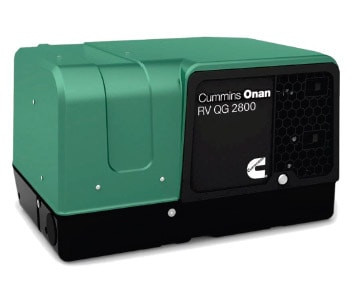
Buy it if: truck campers, pop-ups and small travel trailers with one AC and modest loads.
Skip it if: you run two air conditioners or heavy electric heat; 2,800W will not keep up.
Strengths
Trade-offs
The mid-size workhorse for single-AC trailers
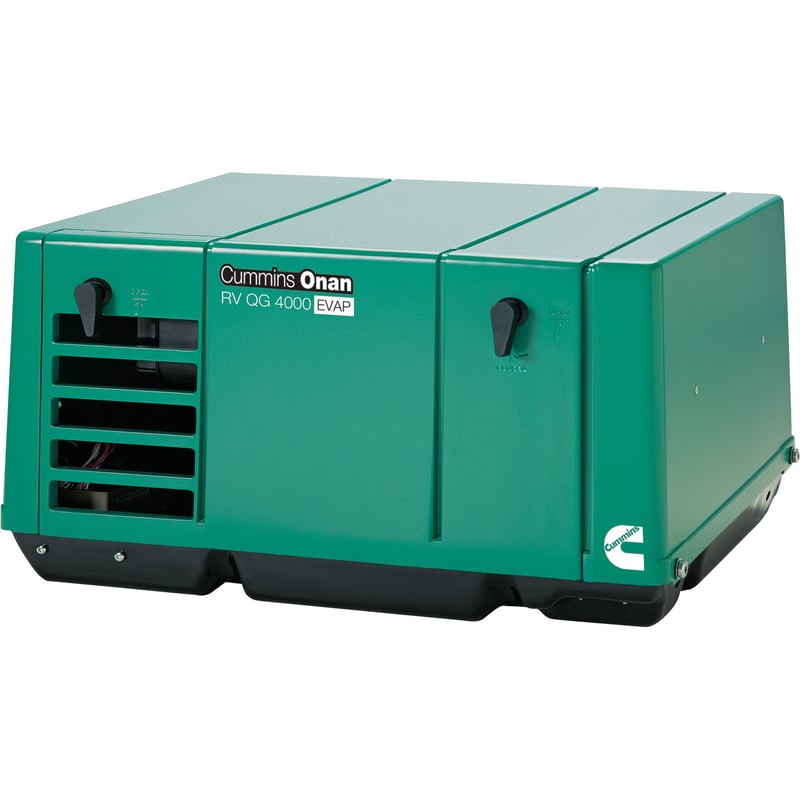
Buy it if: travel trailers with one AC plus microwave, TV and charging running together.
Skip it if: you have two roof ACs; step up to the QG 5500.
Strengths
Trade-offs
Top pick: the two-AC standard for fifth wheels
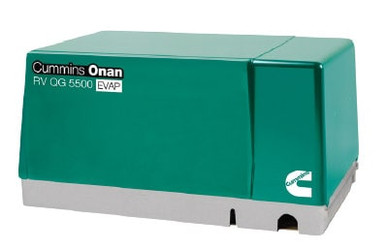
Buy it if: fifth wheels and large travel trailers running two air conditioners.
Skip it if: your RV is diesel-powered; the QD 6000 is the correct match.
Strengths
Trade-offs
Read our full Onan 5500 review for the deep dive: gas vs LP variants, common problems, maintenance schedule, and used-unit inspection checklist.
Maximum gas power for large fifth wheels and Class A rigs
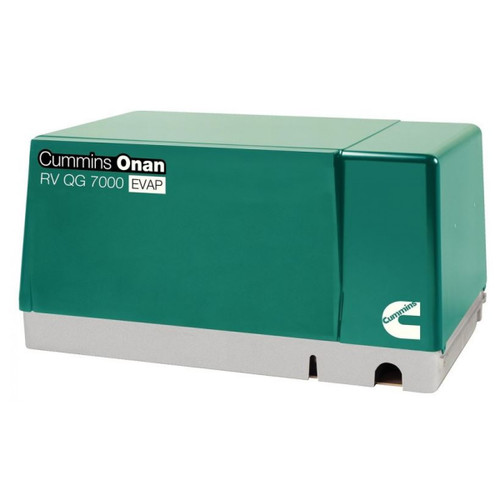
Buy it if: large fifth wheels and gas Class A rigs that run two ACs plus electric appliances simultaneously.
Skip it if: a 5500 covers your loads; the 7000 burns more fuel for capacity you may not use.
Strengths
Trade-offs
Small diesel built-in for compact diesel rigs
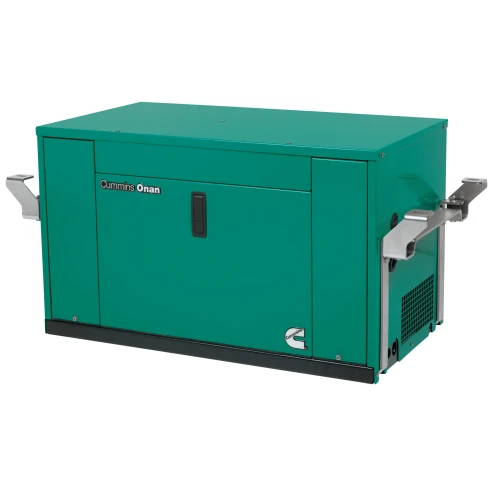
Buy it if: small diesel motorhomes and diesel truck campers wanting single-fuel simplicity.
Skip it if: your RV is gasoline-powered; get a QG model instead.
Strengths
Trade-offs
Best diesel: the diesel-pusher standard
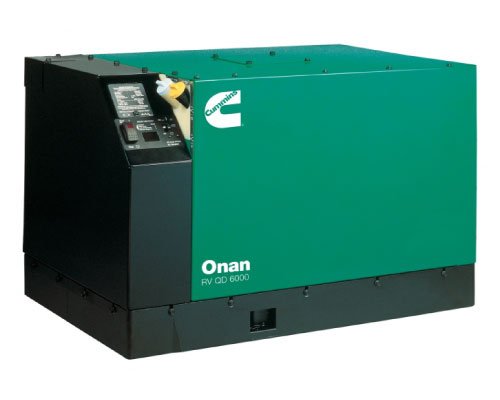
Buy it if: diesel Class A and Super C motorhomes running two ACs plus house loads.
Skip it if: your coach is gasoline; the QG 5500/7000 is the match.
Strengths
Trade-offs
Big diesel power for the largest coaches
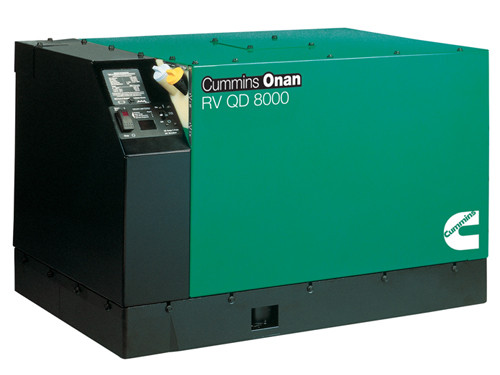
Buy it if: large diesel pushers with three ACs, residential fridges and all-electric coaches.
Skip it if: a QD 6000 covers your loads; the 8000's extra capacity costs fuel.
Strengths
Trade-offs
Portable Onan power for small trailers
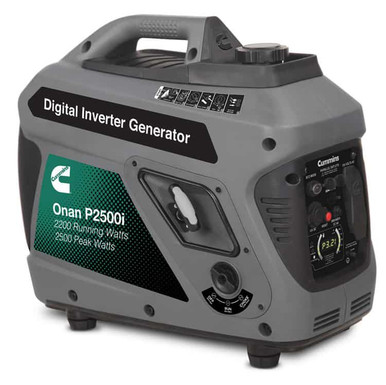
Buy it if: small trailer owners who want the Onan name without a permanent install.
Skip it if: you need to run a roof AC reliably; 2,500W peak is marginal for compressor startup.
Strengths
Trade-offs
Best portable: remote start and RV outlet
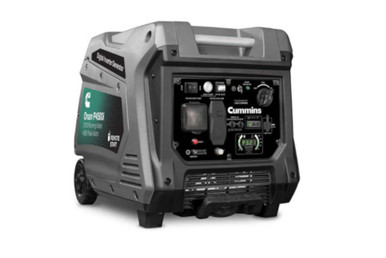
Buy it if: trailer owners who want near-built-in convenience without the install bill.
Skip it if: you need automatic start with a transfer switch; only built-ins do that.
Strengths
Trade-offs
A built-in QG 5500 plus professional installation typically runs several thousand dollars all-in. A P4500i portable delivers 3,700 running watts for roughly a fifth of that and can also back up your house. What the portable cannot do: start itself when the thermostat calls, switch over automatically via a transfer switch, or run while you drive without setup. Full-time RVers and hot-climate travelers usually find the built-in worth it; weekenders with one AC often do not.
Fuel math matters too. At half load the QG 5500 burns about 0.6 gal/hr of gasoline while the QD 6000 burns about 0.40 gal/hr of diesel. Over 500 generator-hours a year, that is roughly 100 fewer gallons with diesel, which is part of why diesel pushers standardize on QD models beyond just fuel sharing.
Cummins recommends dealer installation for all built-in models: compartment ventilation, exhaust routing, fuel connections and transfer-switch wiring all have to meet code, and mistakes create carbon monoxide or fire hazards. Budget for the install on top of the unit price and get it quoted before you buy.
Maintenance is non-negotiable. Exercise any Onan monthly under at least half load for 30 minutes; this is the single biggest factor in generator longevity, preventing the stale-fuel and moisture problems behind most "my generator won't start" stories. Change oil and filters at the manual's hour intervals.Carbon monoxide kills: never run any fuel generator in an enclosed space, keep exhaust away from windows, doors and vents, and make sure your RV's CO detectors work.
One AC in a small trailer: QG 2800 or QG 4000. Two ACs in a fifth wheel or large travel trailer: QG 5500 minimum, QG 7000 for heavy simultaneous loads. Diesel Class A: QD 6000 or QD 8000 matched to your AC count.
For built-in use, usually yes: remote start, transfer-switch integration, and nationwide dealer service. A portable inverter costs far less and suits weekenders, but cannot auto-start or integrate the same way.
Match your RV's fuel. Gas RVs use QG gasoline models; diesel pushers use QD diesel models that share the coach's tank. Diesel burns less per hour and runs longer between overhauls but costs more upfront.
Cummins recommends authorized dealer installation. Ventilation, exhaust routing, fuel lines and transfer-switch wiring must meet code; mistakes risk carbon monoxide, fire, and voided warranty.
69 dB(A) at 10 feet under half load per Cummins spec sheet A-1425, which meets the National Park Service 60 dB(A) at 50 feet limit. Real-world noise varies with installation and ground surface.
Monthly exercise under half load for 30 minutes, oil and filter changes at the manual's intervals, and air filter checks before trips. See our Onan 5500 review for the full schedule.
QG is the gasoline (Quiet Gasoline) series for gas RVs and towables. QD is the diesel (Quiet Diesel) series, liquid-cooled, for diesel motorhomes. There is no gas QD or diesel QG.
Built-in models through Cummins authorized dealers (sales plus installation). Portable P-series models on Amazon and at RV parts retailers.
Affiliate disclosure: RV Solar Power Guide is reader-supported. When you buy through links on our site, we may earn an affiliate commission at no extra cost to you. Built-in Onan generators are sold through dealers; portable models link to retail listings. Recommendations are based on research of manufacturer specifications, not hands-on testing.