Honda EU2200i
- Running Watts
- 1800W
- Noise
- 48 dBA @ 1/4 load
- Weight
- 47.4 lbs
- Fuel
- Gas
- RV Outlet
- Adapter needed
Generators
10 products compared · Specs verified from manufacturers + Amazon · October 2026
The right camping generator is quiet enough for neighbors, light enough to carry, and strong enough for what you actually run. The ten below are compared on verified manufacturer specs: running watts, noise ratings with measurement conditions, weight, fuel type, and RV outlet compatibility. The short answer: the Honda EU2200i is the best all-rounder, the Champion 200961 is the lightest dual-fuel pick at 39 lbs, and the Westinghouse iGen4500 is the one to get if air conditioning is non-negotiable. Size your power needs first.

Affiliate disclosure: RV Solar Power Guide is reader-supported. When you buy through links on this page, we may earn a commission at no extra cost to you. Our picks come from comparing verified specs and price. We don't accept payment for placement.
Top pick
Honda EU2200i: 1,800W running, 48 dBA at quarter load, 47.4 lbs, 3-year warranty
Best for AC
Westinghouse iGen4500: 3,700W running, TT-30R outlet, remote start, 18h runtime
Best value
WEN 56200i: 1,600W running at 51 dBA, 48 lbs, typically the cheapest inverter here
Key rule
Size by starting watts, not running watts. A 13,500 BTU AC needs ~2,800-3,000W to kick on.
Every generator below is an inverter type, which means cleaner power for electronics and much lower noise than open-frame models. Specs are from manufacturer pages and spec sheets. Where a manufacturer does not publish a noise distance or load condition, that is noted rather than guessed.
| Product | Running Watts | Noise | Weight | Fuel | RV Outlet | Buy |
|---|---|---|---|---|---|---|
| Top pickHonda EU2200iRead review ↓ | 1800W | 48 dBA @ 1/4 load | 47.4 lbs | Gas | Adapter needed | Check Price |
| Dual-fuelChampion 200961Read review ↓ | 1850W | 53 dBA @ 23ft | 39 lbs | Gas+Propane | Adapter needed | Check Price |
| BudgetWEN 56200iRead review ↓ | 1600W | 51 dB @ 1/4 load* | 48 lbs | Gas | Adapter needed | Check Price |
| A-iPower SUA2301iRead review ↓ | 1800W | 52 dB* | 42.2 lbs | Gas | RV adapter incl. | Check Price |
| Value ACPredator 3500Read review ↓ | 3000W | 56-57 dBA* | 102 lbs | Gas | RV adapter incl. | Check Price |
| Generac GP3000iRead review ↓ | 2300W | Not published | 59.5 lbs | Gas | L5-30R | Check Price |
| WEN 56380iRead review ↓ | 3400W | 57 dBA @ 1/4 load | 99.2 lbs | Gas | TT-30R yes | Check Price |
| PremiumYamaha EF2200iSRead review ↓ | 1800W | 57-65 dBA* | 55.2 lbs | Gas | TT-30R yes | Check Price |
| Pulsar PGD40iSCORead review ↓ | 3200W | 59 dB* | 47.3 lbs | Gas | 30A RV yes | Check Price |
| Best for ACWestinghouse iGen4500Read review ↓ | 3700W | 52 dBA* | 104.7 lbs | Gas | TT-30R yes | Check Price |
* Distance/load not published by manufacturer. Predator 3500 is a Harbor Freight exclusive, not sold on Amazon.
Start with what you will actually run at the same time. Add up the running watts of everything that might be on together, then check the single hungriest startup load, usually the air conditioner compressor. The generator needs enough running watts for the combo and enough surge capacity for the startup spike.
Every pick in this guide is an inverter generator. Inverters throttle down at light loads, which cuts noise and fuel burn, and they produce clean sine-wave power safe for laptops and phones. Conventional open-frame generators cost less per watt but run at full engine speed constantly, making them too loud for most campgrounds.
Watts measure power at an instant; watt-hours measure energy over time. A 100W light run for 5 hours uses 500 Wh. For generator sizing, watts are what matter. A typical no-AC camper setup (lights, fridge, chargers, fan, TV) peaks around 800 to 1,200W. Add a microwave and you need another 1,000W of headroom while it runs. A 13,500 BTU roof AC typically draws roughly 1,500W running but may need around 2,800 to 3,000W for a few seconds at startup. That is an estimate that varies by AC model, age and conditions, so check your AC\u2019s spec plate. With that estimate, 3,000+ running watts is a practical starting point for reliable AC use.
A 120V, 30-amp RV connection has a theoretical maximum of 3,600W (30A x 120V). A generator with a TT-30R outlet plugs straight into a 30-amp RV cord. Smaller 120V generators can feed a 30-amp RV through an adapter, but only within the generator\u2019s own continuous output and voltage. An adapter never creates extra capacity, and not every adapter arrangement is appropriate for every RV\u2019s wiring and neutral/ground setup. Check your RV manual before adapting. A 50-amp RV service (120/240V) theoretically handles 12,000W across two legs, far beyond any portable generator here. In practice, 50-amp RV owners run one leg off a large portable or parallel pair and manage loads accordingly.
A decibel number without a distance and load condition is marketing, not data. The table above keeps each manufacturer's stated conditions next to the number. As a rough reference, 50 dBA at 23 feet is conversation level; every 10 dBA increase sounds about twice as loud. Campground quiet hours apply regardless of how quiet your generator claims to be.
Best overall camper generator
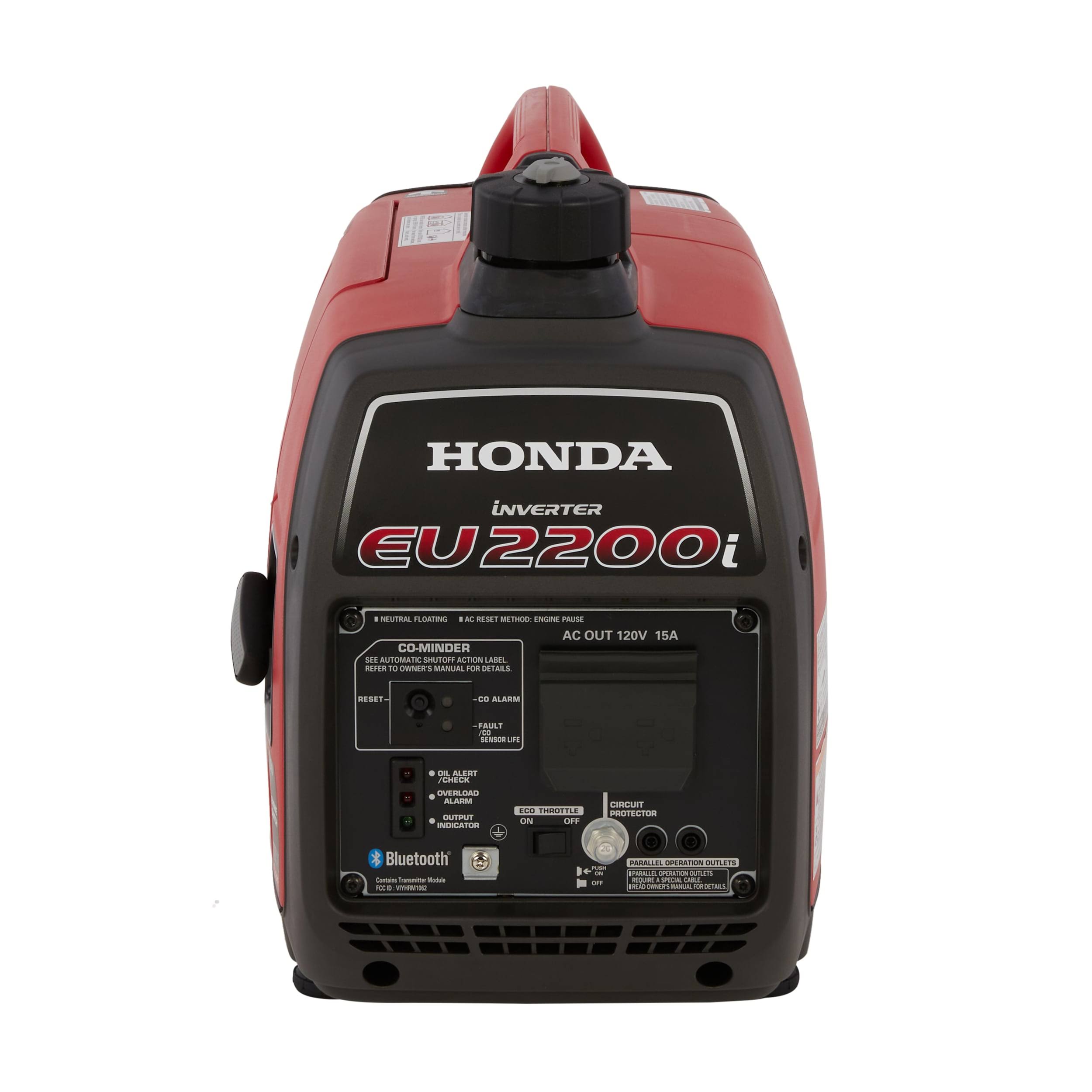
Buy it if: tent, pop-up and van campers who value quiet and reliability over raw watts.
Skip it if: you must run a roof AC; 2,200 starting watts will not reliably start a 13,500 BTU compressor without a soft starter.
Strengths
Trade-offs
Best dual-fuel compact, lightest here
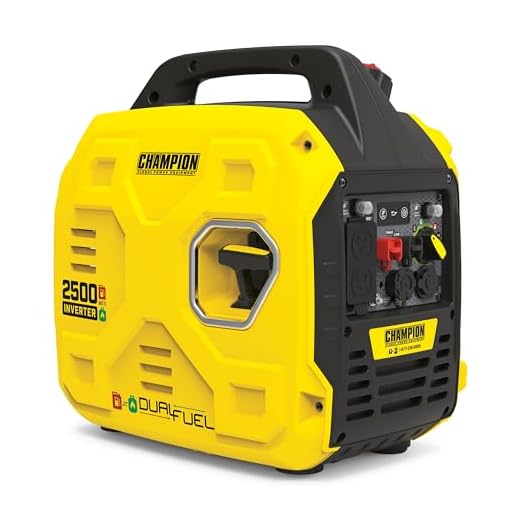
Buy it if: campers who already carry propane and want the lightest capable option.
Skip it if: you need a direct TT-30R connection out of the box.
Strengths
Trade-offs
Best budget camper generator
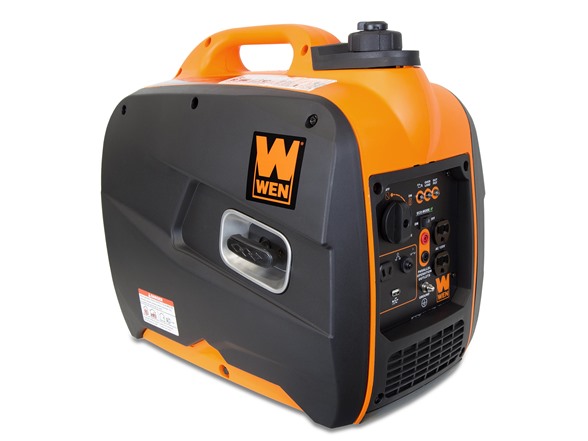
Buy it if: budget campers who want inverter-quiet without the premium price.
Skip it if: you run a microwave and fridge simultaneously; 1,600W headroom is thin.
Strengths
Trade-offs
Best ultralight value
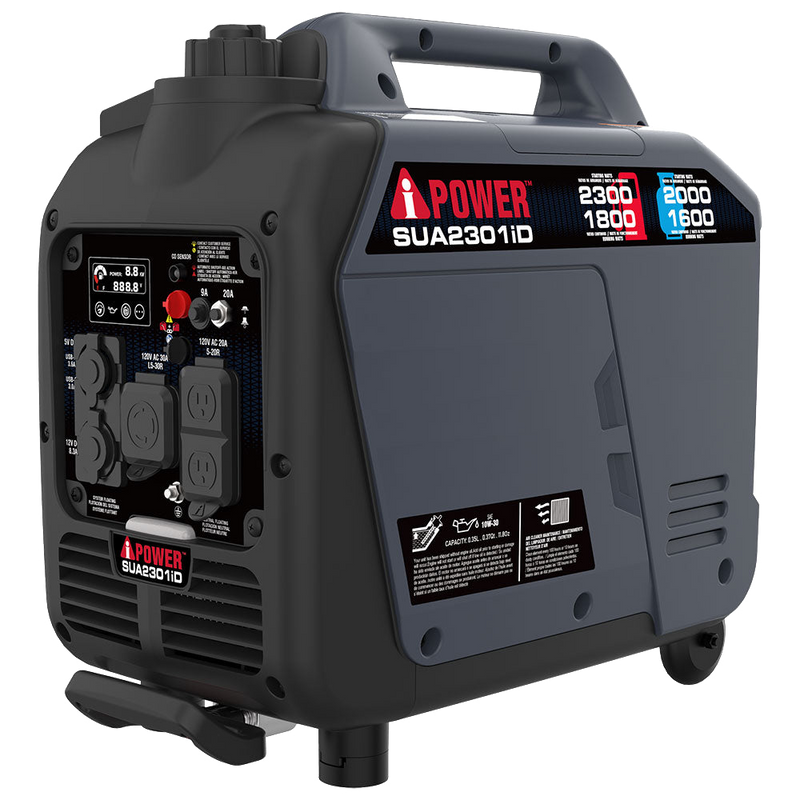
Buy it if: weight-conscious campers who want maximum included accessories.
Skip it if: you want a published warranty and fully specified noise rating.
Strengths
Trade-offs
Best value for running RV AC
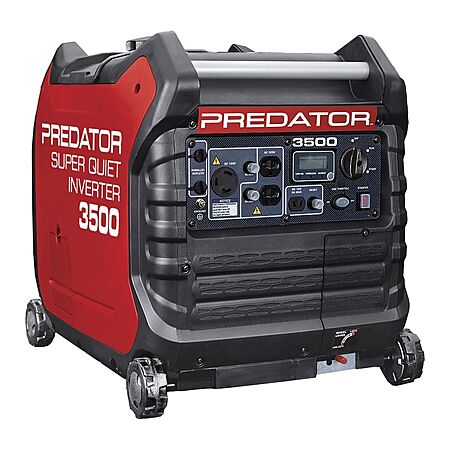
Buy it if: RVers who need AC on a budget and shop at Harbor Freight.
Skip it if: you need an Amazon purchase, a published warranty, or the quietest operation.
Strengths
Trade-offs
Best mid-size step-up
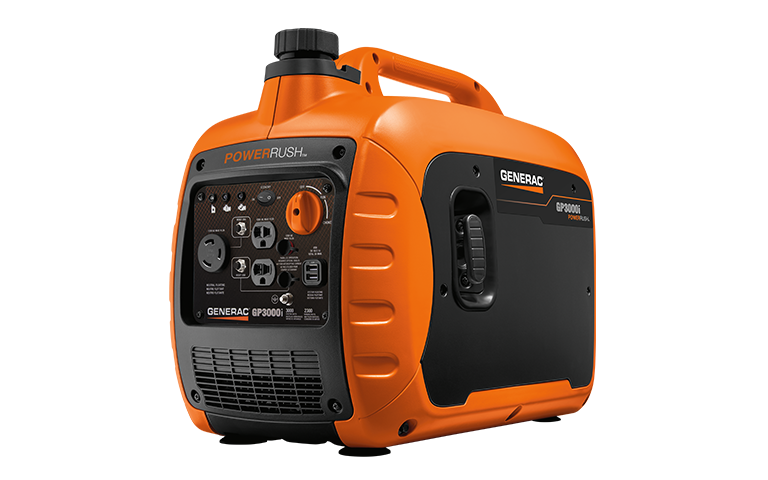
Buy it if: campers who keep tripping a 2,200W unit's overload with a microwave or coffee maker.
Skip it if: noise is the top priority; without a published rating you cannot compare it.
Strengths
Trade-offs
Best RV-ready mid-size
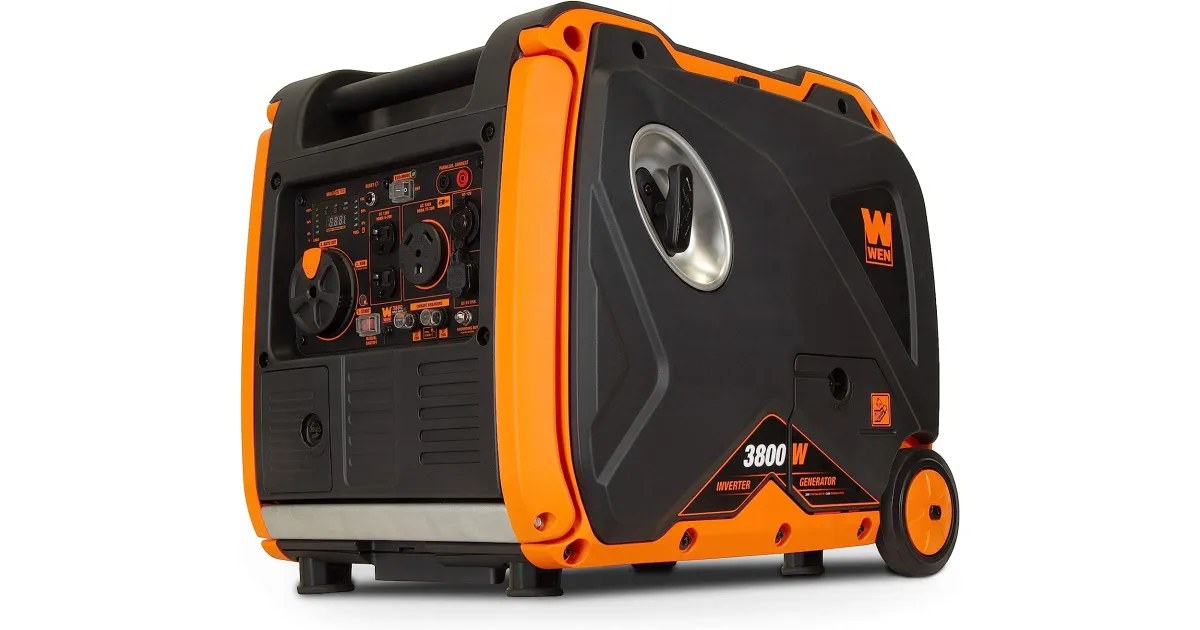
Buy it if: travel-trailer owners who want plug-and-play 30-amp service with AC.
Skip it if: you tent or van camp; 99 lbs and 57 dBA are overkill without an AC.
Strengths
Trade-offs
Premium quiet pick with TT-30R
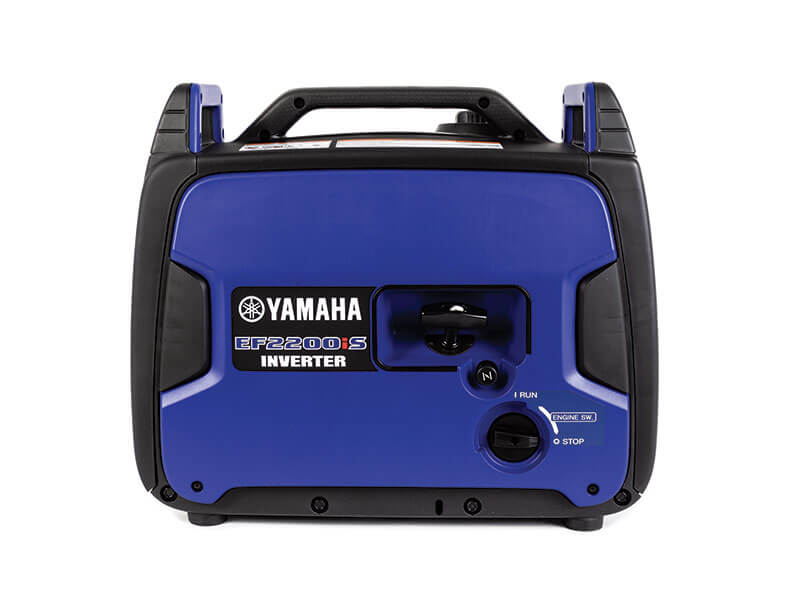
Buy it if: campers who want Honda-tier build with direct RV-cord connection.
Skip it if: you count grams; 55 lbs is the heaviest 2,200W-class unit here.
Strengths
Trade-offs
Most watts per pound
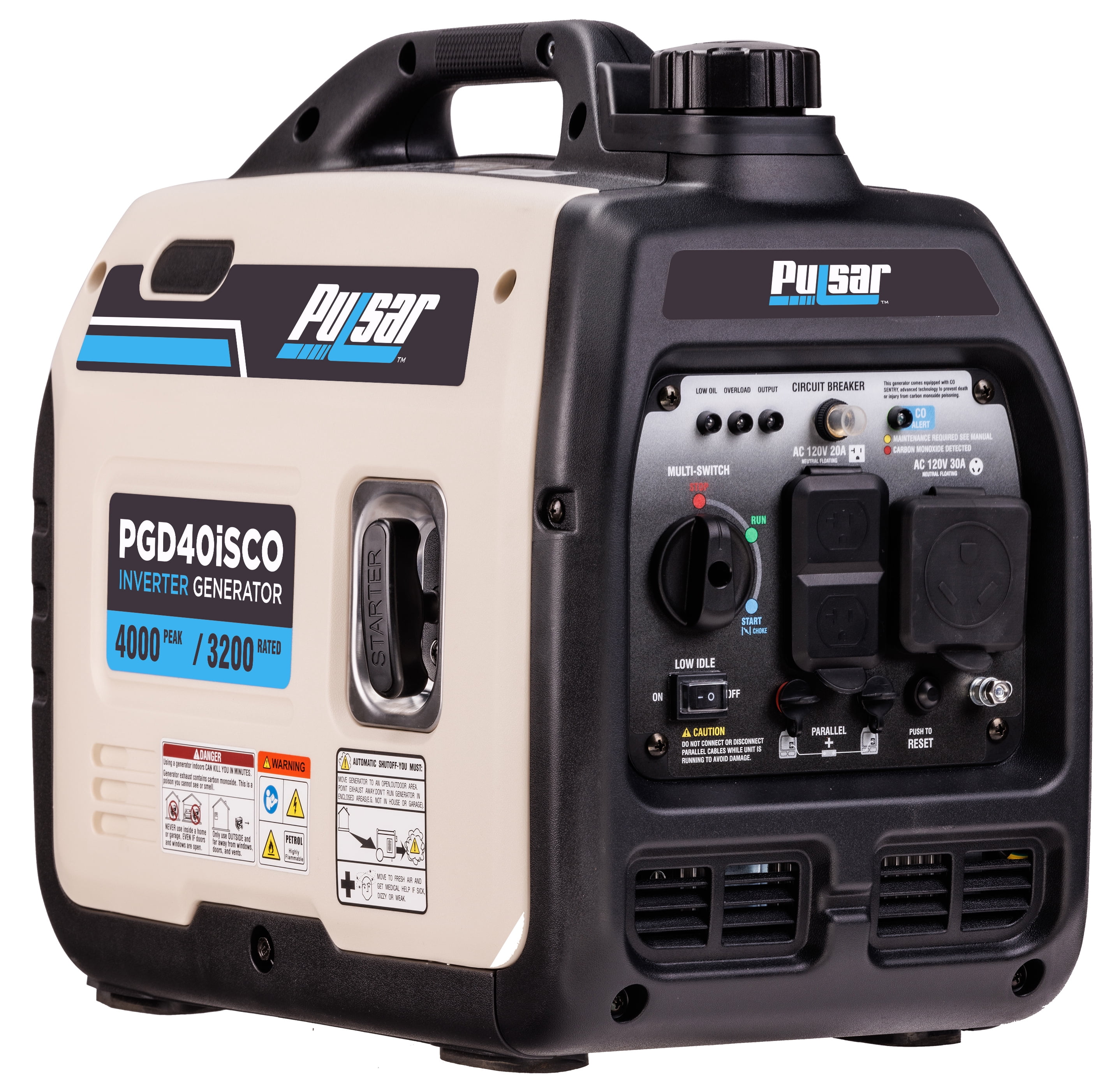
Buy it if: campers who need big watts but carry the generator by hand.
Skip it if: you want long unattended runtime; the small tank needs frequent fills.
Strengths
Trade-offs
Best for RV air conditioning
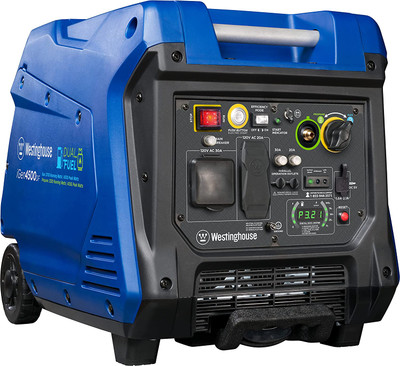
Buy it if: travel-trailer and fifth-wheel owners who run AC regularly.
Skip it if: you tent, van or pop-up camp; 105 lbs is overkill without an AC.
Strengths
Trade-offs
A rooftop AC is the hardest common load to start. The compressor draws a brief inrush current several times its running draw; a 13,500 BTU unit that runs at roughly 1,500W can demand around 2,800 to 3,000W for a few seconds at startup. That is a typical range, not a universal rule: actual starting demand varies by AC model, age, voltage and conditions, so check the AC manufacturer\u2019s electrical specifications. If the generator cannot supply that spike, the compressor stalls and the breaker trips, even though the running watts looked fine on paper.
Three honest options: buy enough generator (3,000+ running watts, like the Predator 3500, WEN 56380i or iGen4500), install a soft starter such as a MicroAir EasyStart which can cut starting current dramatically, or run the AC only on shore power. Do not assume a 2,200W-class generator will start your specific AC; check the AC manufacturer's starting specification first.
Runtime figures only mean something with the load attached. "11 hours" at 25% load is a very different claim from 11 hours at full load; the table notes each manufacturer's stated condition. As a rule, a 2,200W inverter sips roughly 0.1 to 0.15 gallons per hour at light load, while a 4,500W unit working hard can drink over half a gallon per hour.
Carbon monoxide kills. Never run a fuel generator inside a camper, tent, RV, garage or any enclosed space, even with doors open. Operate at least 20 feet from doors, windows and vents with the exhaust pointed away from occupied areas. Let the generator cool before refueling, store fuel in approved containers away from living space, and follow the owner's manual for grounding and maintenance. Respect campground quiet hours; they apply to every generator regardless of its published rating.
2,000 to 3,500 running watts covers most campers without AC. That handles lights, charging, a fridge and small appliances with headroom. Add a microwave and you want the upper end of that range while it runs.
Yes, with enough surge capacity. A 13,500 BTU AC typically needs around 2,800 to 3,000 starting watts, though this varies by model and conditions; check the AC’s spec plate. The Westinghouse iGen4500, WEN 56380i, Pulsar PGD40iSCO and Predator 3500 all clear that bar. 2,200W-class models usually need a soft starter fitted to the AC.
Any generator can feed a 30-amp RV through an adapter, but only models with a TT-30R outlet (Yamaha EF2200iS, WEN 56380i, Pulsar PGD40iSCO, Westinghouse iGen4500) plug the RV cord straight in. Remember 30-amp service maxes at 3,600W; a 2,200W generator cannot deliver more than it makes.
For most campers, yes. They are quieter, lighter, more fuel-efficient at partial load, and produce clean power safe for electronics. Conventional open-frame generators are cheaper per watt but too loud for campgrounds.
Look for under 60 dBA with a stated distance and load. This guide's picks range from 48 to 59 dBA. Never compare two dBA numbers measured at different distances or loads. Quiet hours apply regardless.
If you already carry propane, yes. It never goes stale, burns cleaner, and a 20-lb tank runs the Champion 200961 up to 34 hours at light load. Expect about 10% less running watts on propane than gasoline.
Only with manufacturer support for your exact models, using the manufacturer's parallel kit or cables. Never parallel different brands or mix inverter with conventional generators.
Never run a fuel generator in any enclosed space due to carbon monoxide. Keep it 20+ feet from doors, windows and vents, exhaust pointed away. Cool before refueling. Follow the manual for grounding and maintenance.
Affiliate disclosure: RV Solar Power Guide is reader-supported. When you buy through links on our site, we may earn an affiliate commission at no extra cost to you. Recommendations are based on research of manufacturer specifications, not hands-on testing.