Honda EU2200i
- Running Watts
- 1800W
- Noise
- 48-57 dBA
- Weight
- 47.4 lbs
- Fuel
- Gas
- RV Outlet
- Adapter needed
Generators
12 products compared · Specs verified from manufacturers + Amazon · October 2026
A loud generator ruins a campsite. The generators below are the quietest verified options for RV use, compared on real manufacturer noise ratings (with measurement conditions), running watts, weight, fuel type, and RV outlet compatibility. The short answer: the Honda EU2200i is the quietest at 48 dBA, the Champion 2500 is the lightest at 39 lbs, and the Westinghouse iGen4500 is the pick if you need to run air conditioning reliably. Five generators here can confidently start a 13,500 BTU AC without modifications. Size your power needs first.
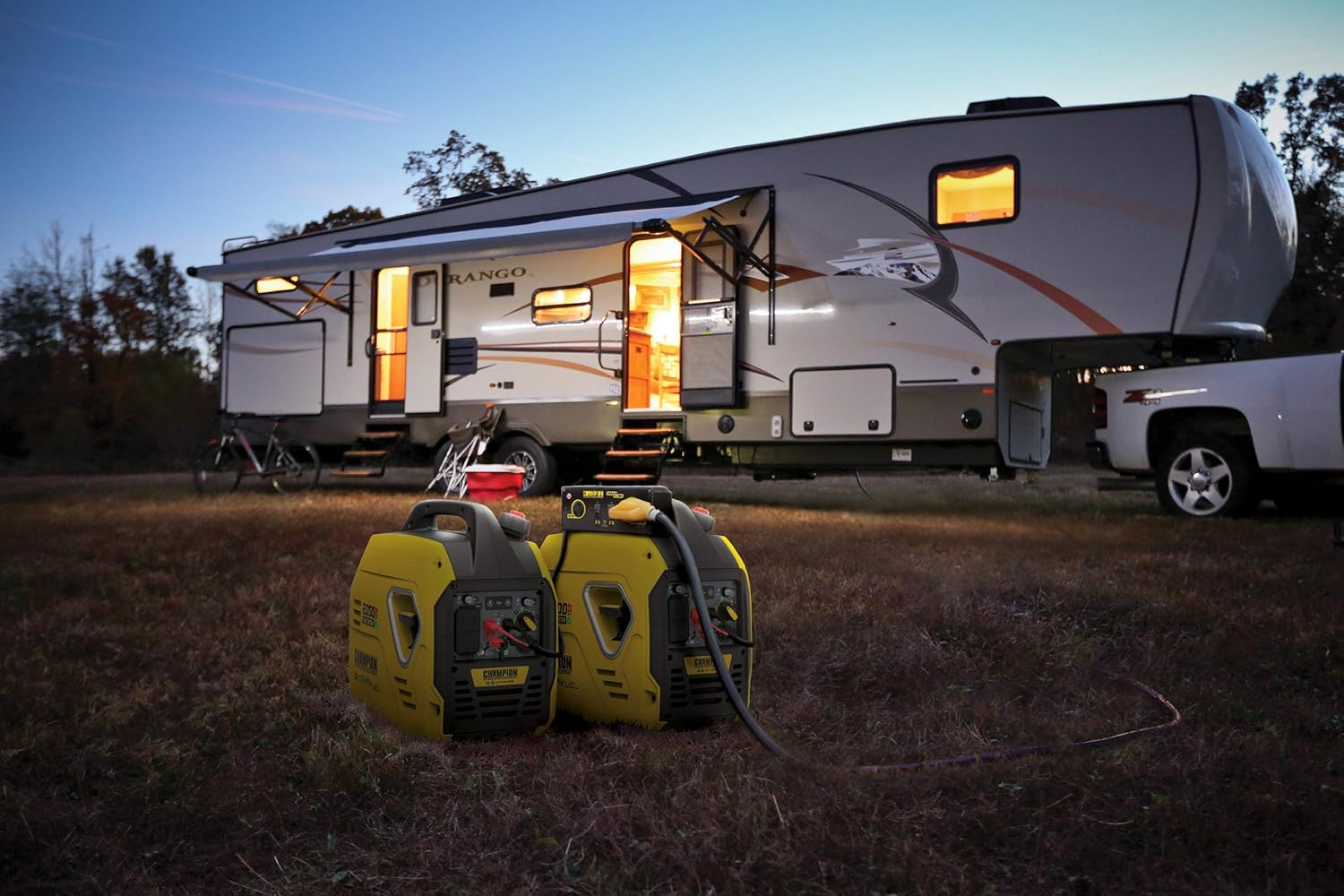
Affiliate disclosure: RV Solar Power Guide is reader-supported. When you buy through links on this page, we may earn a commission at no extra cost to you. Our picks come from comparing verified specs and price. We don't accept payment for placement.
Top pick
Honda EU2200i: 48 dBA lowest verified rating here, 1800W running, 47.4 lbs
Best for AC
Westinghouse iGen4500: 3700W running at 52 dBA, TT-30R, quietest AC-capable pick
Key spec to check
Noise dBA means nothing without distance and load conditions. Always check both.
Every generator below is an inverter type (clean power for electronics) with a verified Amazon listing, checked October 2026. Noise ratings come from manufacturer specs with measurement conditions noted. Important: manufacturers test noise differently. Honda rates 48 dBA at quarter load; Champion rates 53 dBA from 23 feet; Yamaha rates 57 dBA at quarter load. These are not directly comparable without accounting for the different test conditions. We note the conditions for each.
| Product | Running Watts | Noise | Weight | Fuel | RV Outlet | Buy |
|---|---|---|---|---|---|---|
| Top pickHonda EU2200iRead review ↓ | 1800W | 48-57 dBA | 47.4 lbs | Gas | Adapter needed | Check Price |
| Yamaha EF2200iSRead review ↓ | 1800W | 57-65 dBA* | 55.2 lbs | Gas | TT-30R yes | Check Price |
| 39 lbsChampion 2500WRead review ↓ | 1850W | 53 dBA @ 23ft | 39 lbs | Gas | Adapter needed | Check Price |
| WEN 56235iRead review ↓ | 1900W | 51 dBA* | 39 lbs | Gas | Adapter needed | Check Price |
| Westinghouse iGen2550cRead review ↓ | 1900W | 52 dBA* | 42 lbs | Gas | TT-30R yes | Check Price |
| Dual-fuelChampion 2500W Dual-FuelRead review ↓ | 1850W gas | 53 dBA @ 23ft | 43.2 lbs | Gas+Propane | Adapter needed | Check Price |
| Pulsar PGD40iSCORead review ↓ | 3200W | 59 dB | 47.3 lbs | Gas | TT-30R yes | Check Price |
| Honda EU3200iRead review ↓ | 2600W | 54-58 dBA | 65 lbs | Gas | Adapter needed | Check Price |
| Champion 4500WRead review ↓ | 3500W | 61 dBA @ 23ft | 95 lbs | Gas | TT-30R yes | Check Price |
| WEN 4800WRead review ↓ | 4000W | 62 dBA* | 77 lbs | Gas | TT-30R yes | Check Price |
| Westinghouse iGen4500Read review ↓ | 3700W | 52 dBA* | 104.7 lbs | Gas | TT-30R yes | Check Price |
| Champion 2000W Dual-FuelRead review ↓ | 1600W | 53 dBA @ 23ft | 39 lbs | Gas+Propane | Adapter needed | Check Price |
* Noise measured at low/quarter load. Loaded noise is higher. dB vs dBA as published by manufacturer.
Listed best-first for RV camping use. Our method: we compared verified noise ratings with measurement conditions, running watts, weight, fuel type, RV outlet compatibility, and air conditioner capability. No paid placements, no lab-test claims.
The lowest verified noise rating in this comparison.
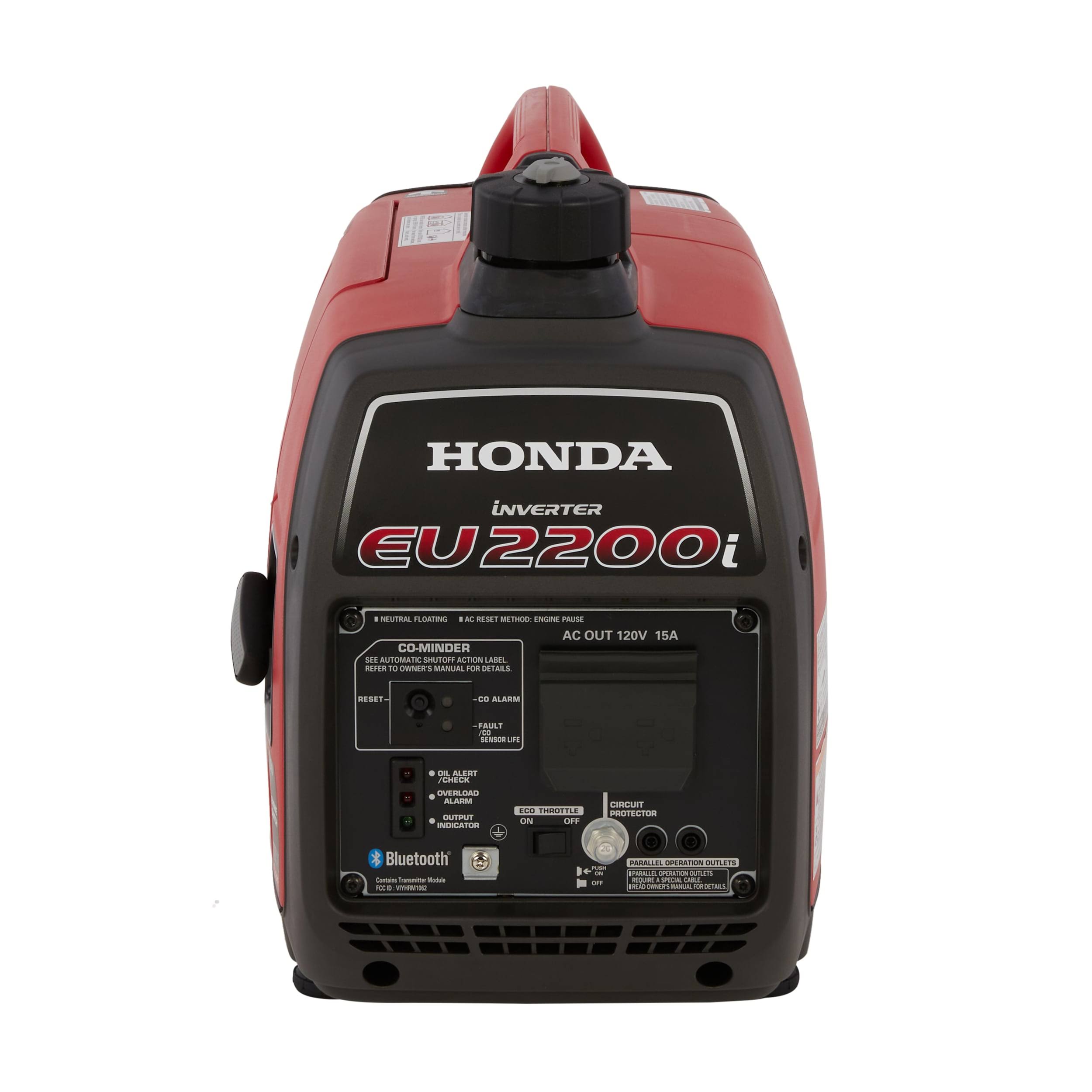
Buy it if: campers who prioritize the lowest verified noise level and legendary Honda reliability. The 48 dBA quarter-load rating is the lowest confirmed figure among the 12 models compared here, under Honda\u2019s stated test conditions.
Skip it if: you need to run air conditioning reliably without modifications, or you want a built-in TT-30R outlet.
Strengths
Trade-offs
Honda-class quality with built-in RV outlet.
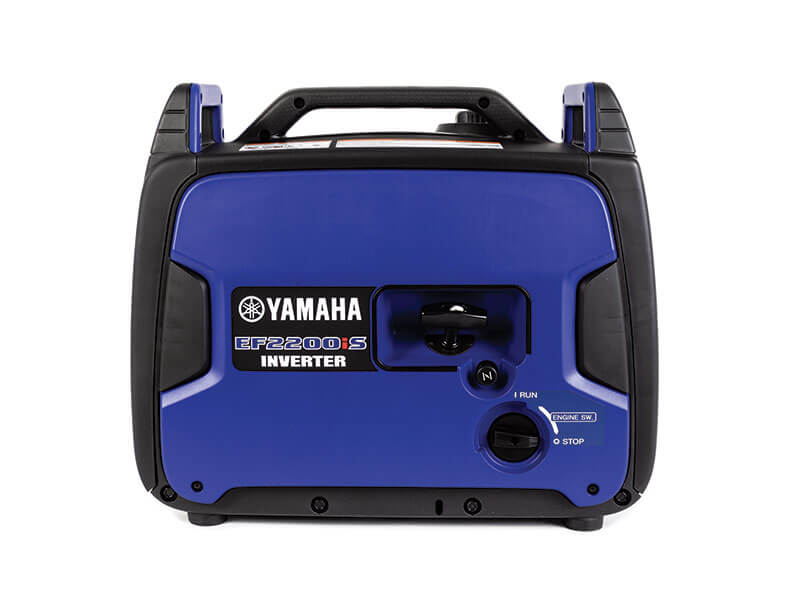
Buy it if: RVers who want Japanese reliability with a built-in TT-30R outlet so no adapter is needed.
Skip it if: every decibel matters to you; the 57 dBA quarter-load rating is higher than Honda's 48 dBA.
Strengths
Trade-offs
Tied lightest at 39 pounds.
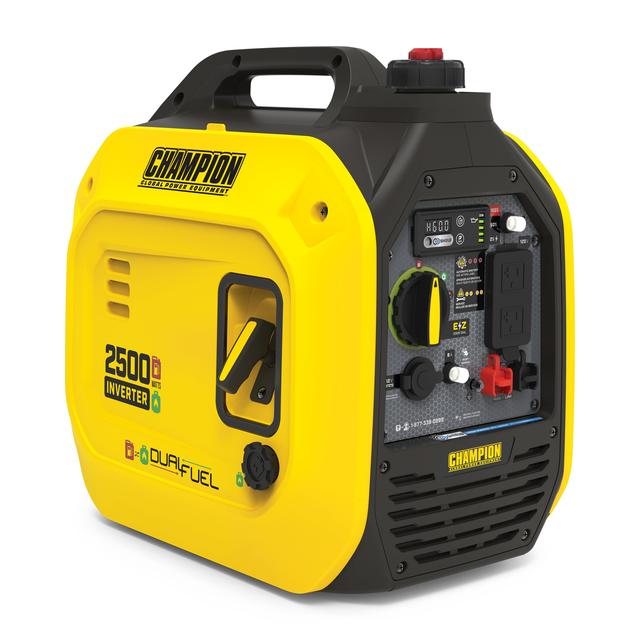
Buy it if: anyone who lifts the generator alone. At 39 lbs it is the lightest verified option, with 1850W running for a bit more AC headroom than Honda/Yamaha.
Skip it if: you need a TT-30R outlet built in, or the absolute lowest noise figure.
Strengths
Trade-offs
51 dBA quiet with the most running watts in its class.
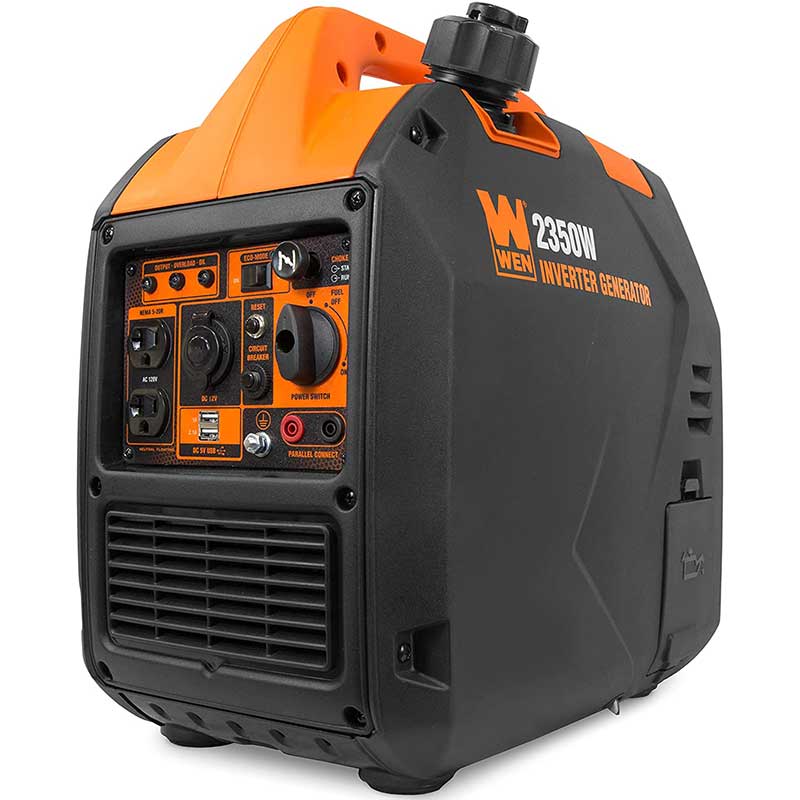
Buy it if: value buyers who want the most running watts (1900W) and low 51 dBA noise in a 39-lb package.
Skip it if: you need a TT-30R outlet or the Honda service network.
Strengths
Trade-offs
RV-ready 30A outlet in a 42-pound package.
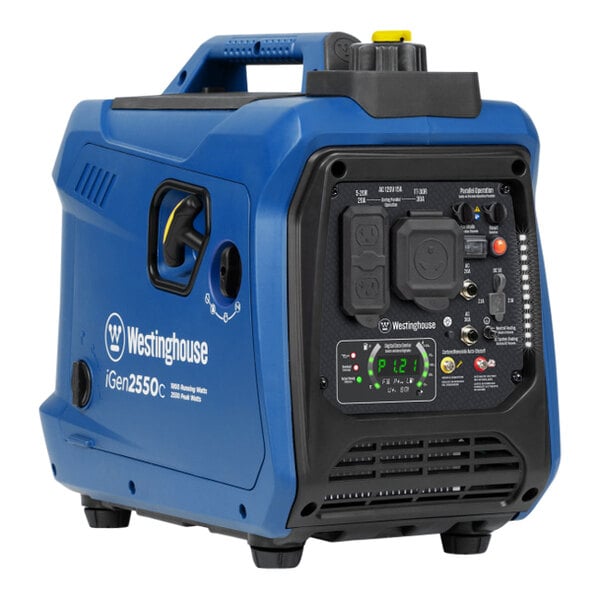
Buy it if: RVers who want a built-in TT-30R outlet, 1900W running, and 52 dBA noise in a portable 42-lb unit.
Skip it if: you take the 52 dBA figure at face value; it is a low-load rating, and loaded noise will be higher.
Strengths
Trade-offs
Propane option for RVers who already carry LPG.
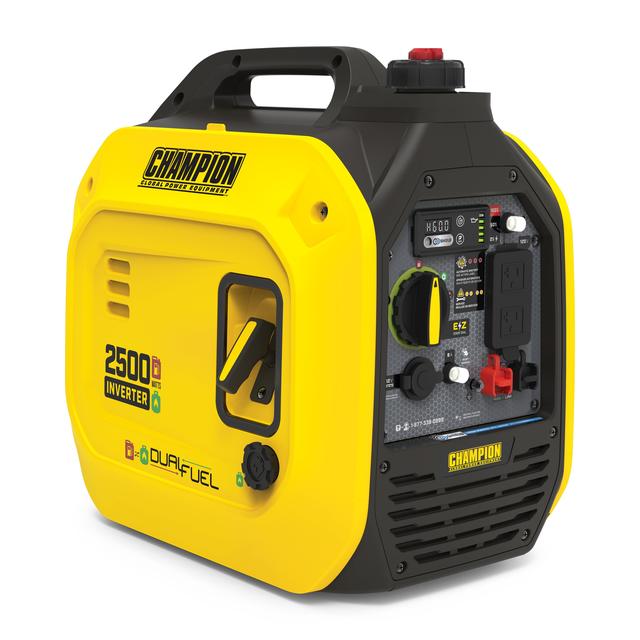
Buy it if: RVers who already carry propane and want fuel flexibility. Propane stores indefinitely and burns cleaner.
Skip it if: you need maximum AC capability; propane derating to 1665W running makes AC startup very tight.
Strengths
Trade-offs
3200W running with TT-30R at 47 pounds.
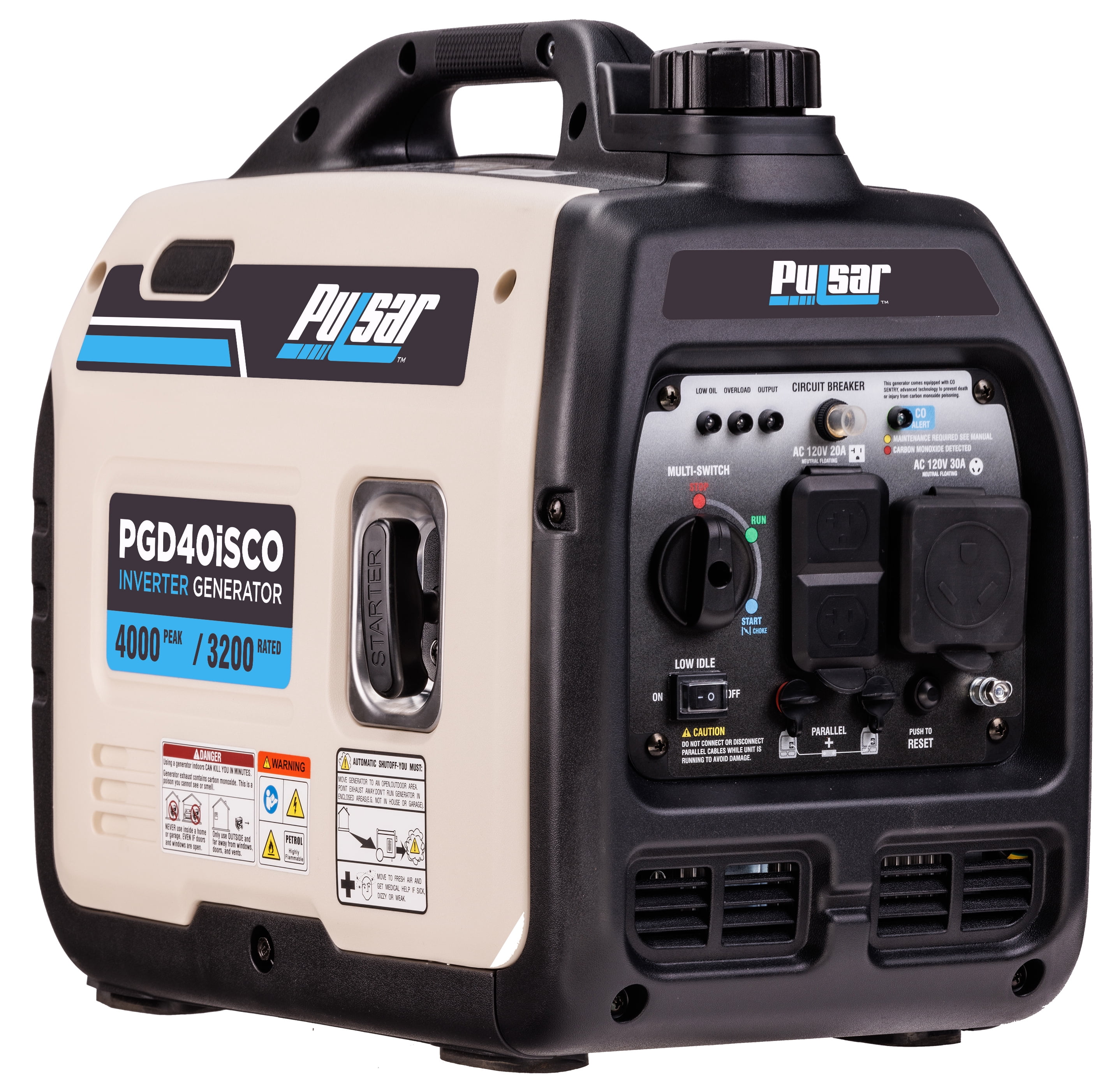
Buy it if: RVers who need real AC capability in a portable package. 3200W running starts a 13,500 BTU AC without a soft-start kit.
Skip it if: lowest noise is the priority; 59 dB is louder than the 2000W class.
Strengths
Trade-offs
Step-up Honda power with RV outlet.
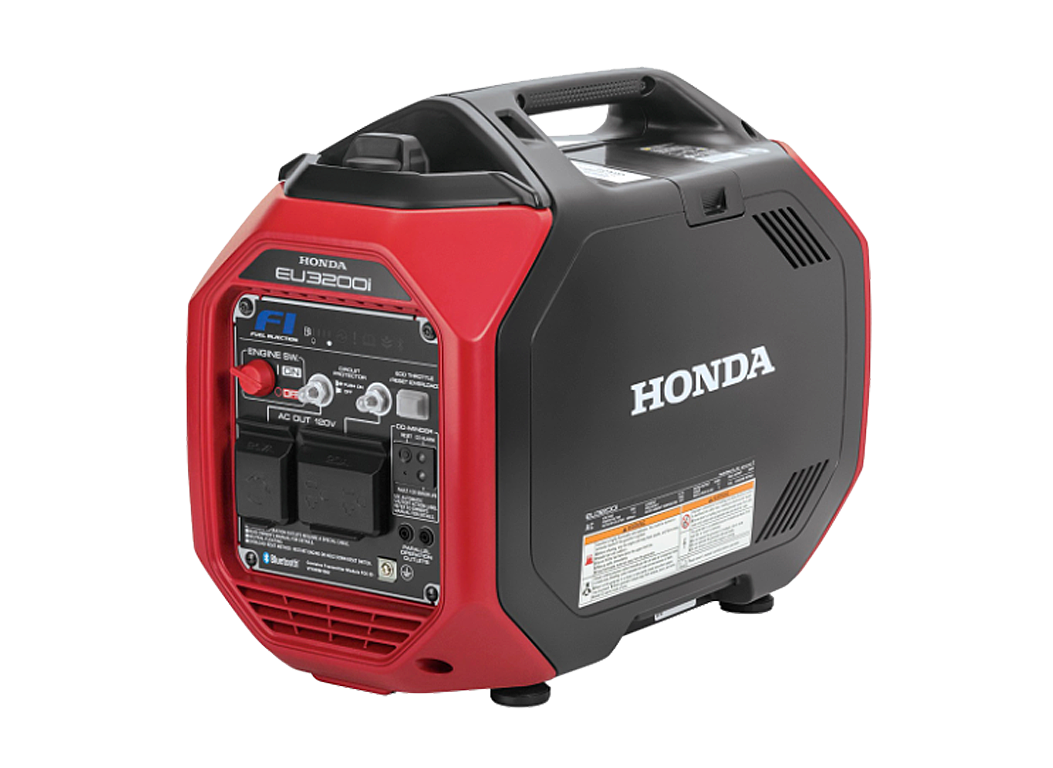
Buy it if: Honda loyalists who need more than 2200W. 2600W running handles a 13,500 BTU AC with reasonable headroom.
Skip it if: budget matters; this is premium-priced per watt. Also note: no built-in TT-30R, you need a locking-to-TT-30R adapter.
Strengths
Trade-offs
3500W running for confident AC operation.
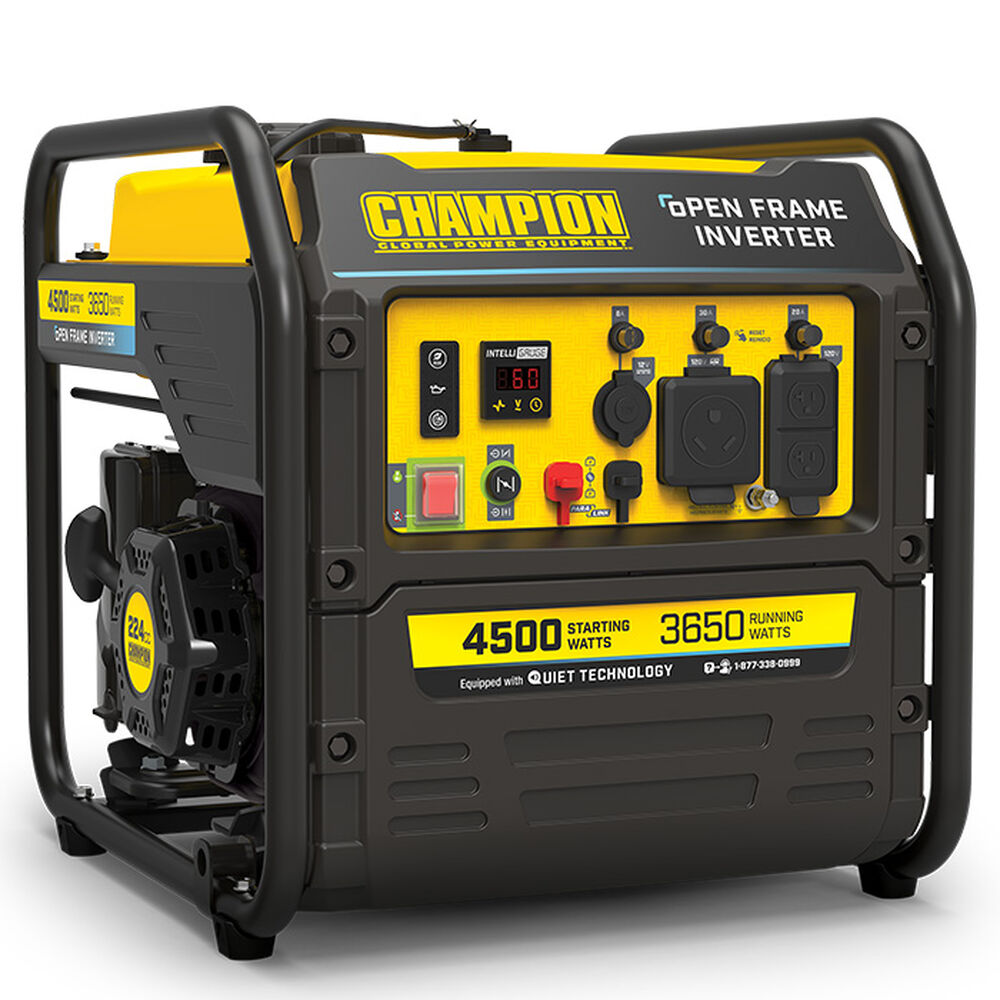
Buy it if: larger RVs or anyone who wants to run the AC plus other appliances simultaneously without thinking about load management.
Skip it if: portability matters; 95 lbs needs two people or a ramp. 61 dBA is the loudest here.
Strengths
Trade-offs
4000W running with electric start.
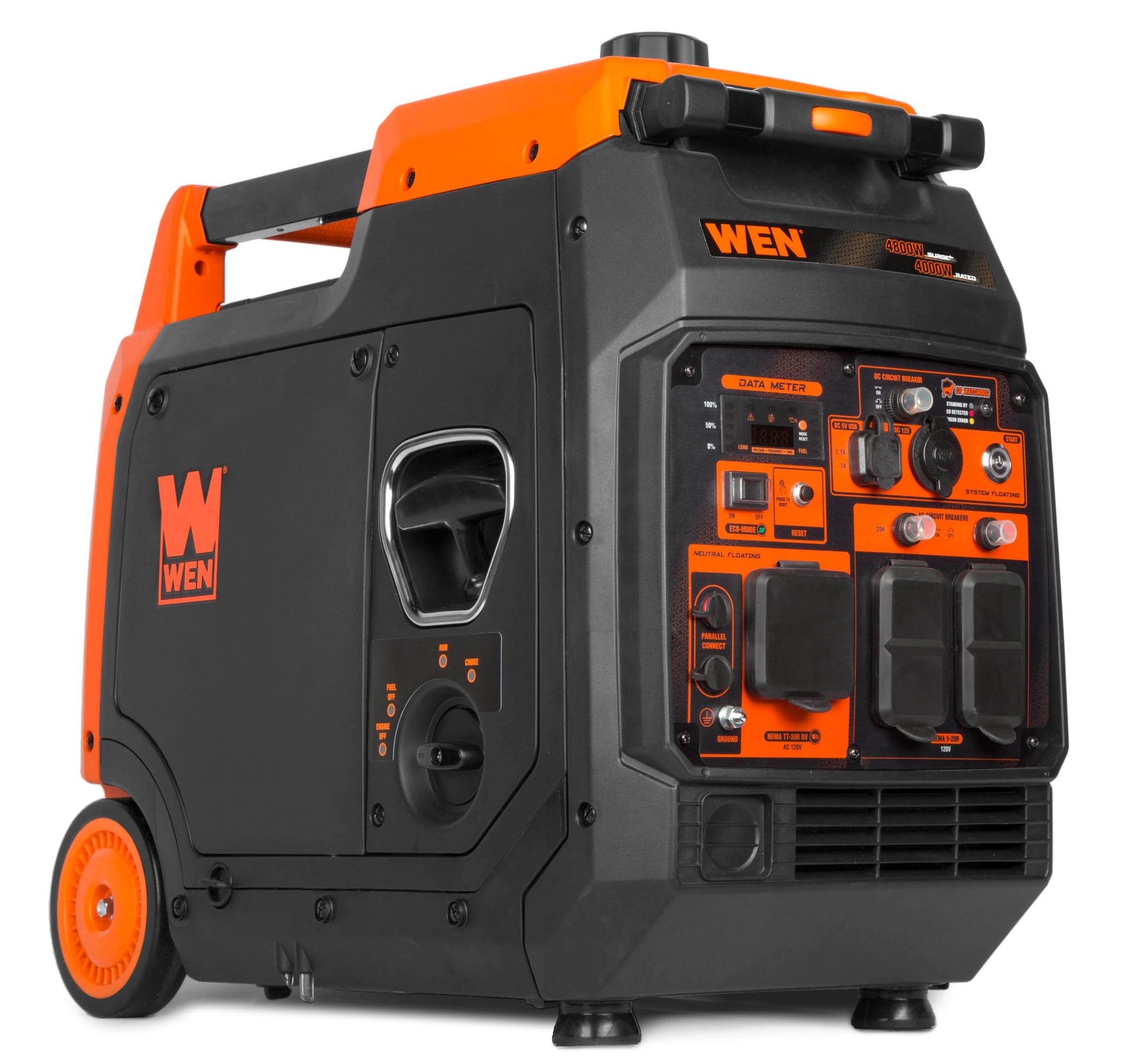
Buy it if: maximum power in a wheeled inverter. 4000W running can handle a 15,000 BTU AC plus other loads.
Skip it if: quiet is the top priority; 62 dBA is audible. 77 lbs needs the wheels.
Strengths
Trade-offs
3700W running at 52 dBA with RV outlet.
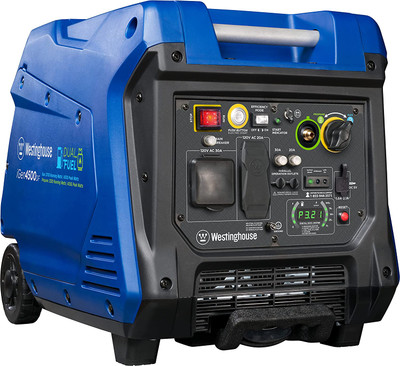
Buy it if: the best combination of high output and low noise. 52 dBA at low load is remarkably quiet for 3700W, with 18-hour runtime.
Skip it if: you need to lift it; 104.7 lbs requires the wheels and a ramp.
Strengths
Trade-offs
Lightest dual-fuel at 39 pounds.
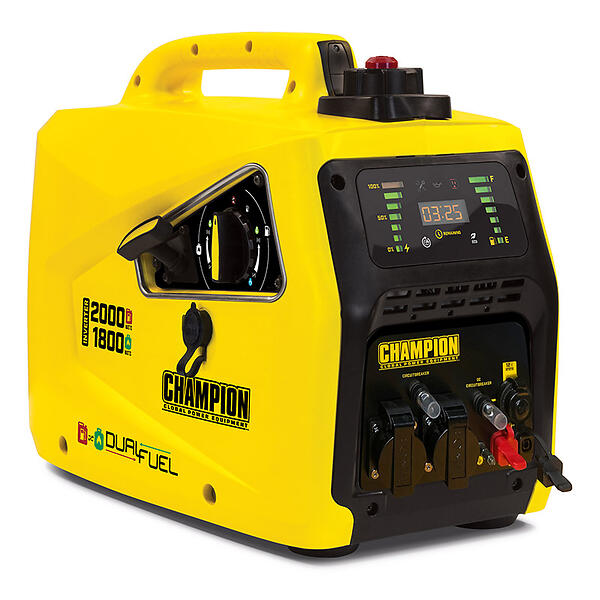
Buy it if: light loads only: charging batteries, running fans and lights, powering laptops. The lightest dual-fuel option.
Skip it if: you need to run an air conditioner or microwave; 1600W is not enough.
Strengths
Trade-offs
Generator noise is measured in decibels (dBA), but the number alone tells you almost nothing. You need three facts: the dBA figure, the distance it was measured from, and the load. A generator rated 52 dBA at quarter load will be louder at full load. A rating from 23 feet cannot be directly compared to one from 7 meters without conversion. In this guide we publish each manufacturer's rating with its stated conditions. As a rule of thumb, sound drops about 6 dB every time you double the distance: 53 dBA at 23 feet is roughly 47 dBA at 46 feet.
Every generator has two wattage figures. Starting (peak) watts is the brief surge it can handle for a few seconds. Running (rated) watts is what it sustains continuously. Size for running watts against your continuous loads, and check that starting watts cover your largest motor surge. Example: a 13,500 BTU AC draws 1,200-1,500W running but surges to ~2,750W at compressor start. A 2000W-class generator (1800W running / 2200W starting) cannot reliably cover that surge; a 3500W-running unit can.
This is the question every RVer asks. A typical 13,500 BTU roof AC needs roughly 2,750W surge (varies by unit) for a fraction of a second at startup, then settles to 1,200-1,500W. Generators with 3200W+ running watts (Pulsar PGD40iSCO, Champion 4500W, WEN 4800W, Westinghouse iGen4500, Honda EU3200i) handle this without modifications. Generators with 1800-1900W running (Honda EU2200i, Yamaha, Champion 2500, WEN 56235i, Westinghouse iGen2550c) are marginal: they can work if you install a soft-start kit on the AC (which reduces startup surge to ~1,200W) and turn off other loads during startup. We mark each product honestly above.
A TT-30R is the 30A 120V RV shore-power receptacle. Generators with a built-in TT-30R (Yamaha EF2200iS, Westinghouse iGen2550c, Pulsar, Honda EU3200i, Champion 4500W, WEN 4800W, Westinghouse iGen4500) accept your RV power cord directly. Generators without one need a 15A-to-30A dogbone adapter. Critical: the adapter does not create more power. An 1800W generator delivers 1800W whether through a TT-30R or an adapter. The outlet is about convenience, not capacity.
A 30A RV service provides up to 3,600W (30A x 120V). A single 3500W+ generator can power most of a 30A RV's loads. A 50A RV service provides up to 12,000W (50A x 240V). No portable inverter generator produces 12,000W. If you have a 50A rig, a 4000W-class generator runs one AC plus basics; you cannot run everything at once. Do not buy a generator expecting full 50A service from a portable unit.
Dual-fuel generators run on gasoline or propane. Propane stores indefinitely (gasoline goes stale in months), burns cleaner, and you may already carry it for the RV furnace and fridge. The cost: about 10-15% less running watts on propane. The Champion 2500 dual-fuel makes 1850W on gas but 1665W on propane. If you need every watt for AC startup, run on gasoline. If convenience matters more, propane is excellent.
Think about who lifts the generator. The 2000W class ranges from 39 lbs (Champion 2500, WEN 56235i) to 55 lbs (Yamaha). One person can manage these. The 3500W+ class ranges from 77 lbs (WEN 4800W, wheeled) to 105 lbs (Westinghouse iGen4500, wheeled). These need wheels, ramps, or two people. Do not buy a 95-lb generator if you camp solo and have a high truck bed.
Most generators in this guide include a CO shutoff sensor (see specs for each model). That does not make unsafe placement acceptable. Always run fuel generators outdoors, at least 20 feet from the RV, with exhaust pointed away from doors, windows, slides, and air intakes. Never in the RV, in a storage bay, under the awning, or in any enclosed space. Never refuel a hot generator. Let it cool before adding gasoline.
The Honda EU2200i at 48 dBA (quarter load) is the lowest verified rating among the models compared here. The WEN 56235i (51 dBA) and Westinghouse iGen4500 (52 dBA) follow. Always check measurement distance and load; ratings are not directly comparable otherwise.
A typical 13,500 BTU AC needs ~2,750W surge and 1,200-1,500W running (varies by AC model). Generators with 3200W+ running (Pulsar, Champion 4500W, WEN 4800W, Westinghouse iGen4500) are sized to handle typical 13,500 BTU AC startup in most conditions. 1800-1900W units need a soft-start kit on the AC.
Not at full capacity. 50A service is 12,000W; no portable makes that much. A 4000W generator runs one AC plus basics on a 50A rig with load management. For full 50A you need shore power or a built-in generator.
About as loud as a quiet conversation, measured at 23 feet. Sound drops ~6 dB per distance doubling, so ~47 dBA at 46 feet. For reference: 50 dBA is a quiet suburb, 60 dBA is normal conversation.
It is convenient but not essential. Without one, use a 15A-to-30A dogbone adapter. The adapter does not create more power; an 1800W generator still delivers 1800W.
At 25% load: Honda EU2200i ~8 hrs (0.95 gal), Champion 2500 ~11.5 hrs (1.1 gal), Westinghouse iGen4500 ~18 hrs (3.4 gal). Check manufacturer specs for other load levels.
If you already carry propane, yes for convenience. Propane stores forever and burns cleaner, but you lose 10-15% running watts versus gasoline.
Yes with the manufacturer's parallel kit. Two Honda EU2200i units make 3600W running (not 4400W; there are losses). Both units should be the same model.
Yes outdoors, 20+ feet from the RV, exhaust away from openings. Never inside or in enclosed spaces. CO sensors help but do not replace safe placement. Observe quiet hours.
2000W class: 39-55 lbs (one-person lift). 3500W+ class: 77-105 lbs (wheeled, needs ramp or two people).