Renogy 600W Premium Kit
- Configuration
- 6x100W N-Type
- Controller
- 60A MPPT
- Max PV Input
- 800W / 140V
- Kit Type
- Complete kit
- Standout
- Most expansion headroom
Solar Panels
12 products compared · Specs verified from manufacturers + Amazon · October 2026
600 watts is the sweet spot for serious RV solar: enough to run your fridge, fans, lights, and devices for days off-grid, without eating your whole roof. We compared 12 of the best 600W RV solar panels and kits on verified specs, controller quality, and price. The short answer: the Renogy 600W Premium Kit is the best complete kit for most RVers, the ACOPOWER 600W 6x100W kit brings a 50A MPPT and a 25-year panel warranty, the DOKIO 600W flexible set is the budget way in, and the Go Power! Solar Extreme is the no-compromise premium system. Not sure 600W is your number? Size your system first.
Affiliate disclosure: RV Solar Power Guide is reader-supported. When you buy through links on this page, we may earn a commission at no extra cost to you. Our picks come from comparing verified specs and price. We don't accept payment for placement.
Top pick
Renogy 600W Premium Kit: purpose-built RV kit with 60A MPPT
Budget pick
DOKIO 600W Flexible (6x100W): cheapest verified path to 600W
Premium pick
Go Power! Solar Extreme: full 600W system with 3000W inverter
Key spec to check
Controller type: a 600W array needs 50A+ MPPT on 12V
Every pick below is a real 600W configuration: six 100W panels, four 150W panels, three 200W panels, two 300W panels, or a single 600W foldable unit. Specs come from manufacturer pages and listings, checked October 2026. Where a spec could not be confirmed twice, we left it out rather than guess. Six picks are panel-only bundles without a charge controller: ALLPOWERS SP039, DOKIO, BougeRV, both Rvpozwer configurations, and TATOODAA. You will need to add an MPPT controller, wiring, fuses, and mounting hardware separately. The Go Power Solar Extreme is a complete RV power system (panels + 30A PWM controller + 3000W inverter charger + transfer switch), not a panel kit; the Amazon listing is the 570W version.
| Product | Configuration | Controller | Max PV Input | Kit Type | Standout | Buy |
|---|---|---|---|---|---|---|
| Top pickRenogy 600W Premium KitRead review ↓ | 6x100W N-Type | 60A MPPT | 800W / 140V | Complete kit | Most expansion headroom | Check Price |
| ACOPOWER 600W KitRead review ↓ | 6x100W Mono | 50A MPPT | 625W / 150V | Complete kit | Tight 12V limit, no expansion | Check Price |
| ALLPOWERS SP039 600WRead review ↓ | 600W foldable | None (panel only) | Needs 60V+ MPPT | Panel only | Portable, IP67 panel | Check Price |
| Budget pickDOKIO 600W FlexibleRead review ↓ | 6x100W flexible | None (panel only) | Needs 50A MPPT | Panel only | Lightest, adhesive OK | Check Price |
| BougeRV 600W BifacialRead review ↓ | 2x300W bifacial | None (panel only) | Needs 100V+ MPPT | Panel only | Bifacial, 10yr warranty | Check Price |
| Rich Solar 600W KitRead review ↓ | 3x200W | 40A MPPT | 600W / 100V | Complete kit | Well-matched system | Check Price |
| HQST 600W KitRead review ↓ | 6x100W | 40A MPPT | 600W / 100V | Complete kit | Wire 3s2p only | Check Price |
| ExpertPower 600W KitRead review ↓ | 6x100W | 60A MPPT | 150V max | Complete kit | 60A headroom | Check Price |
| Rvpozwer 3x200W N-TypeRead review ↓ | 3x200W N-Type | None (panel only) | Needs MPPT | Panel only | 25% claimed, unverified | Check Price |
| Rvpozwer 6x100W N-TypeRead review ↓ | 6x100W N-Type | None (panel only) | Needs MPPT | Panel only | 25% claimed, unverified | Check Price |
| Premium pickGo Power! Solar ExtremeRead review ↓ | 3x190W (570W) | 30A PWM | N/A | Full power system | Inverter + transfer switch | Check Price |
| TATOODAA 2x300W BifacialRead review ↓ | 2x300W bifacial | None (panel only) | Needs MPPT | Panel only | Verify specs carefully | Check Price |
Listed best-first for RV roof installs. Panel-only picks need a separate charge controller; kit picks include one. Our method: we compared verified specs, kit completeness, controller quality, warranty terms, and price. No paid placements, no lab-test claims.
The safest 600W buy for most RVers: one box, one brand, one proper MPPT controller.
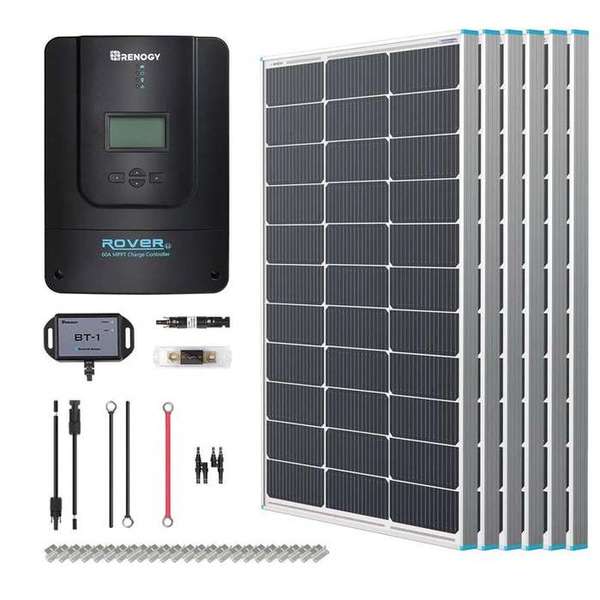
Buy it if: a permanent RV roof install where you want every part matched from one box: panels, a proper 60A MPPT controller, and monitoring.
Skip it if: you need something portable, or your roof can't fit six separate 100W panels around vents and the AC unit.
Strengths
Trade-offs
The 50A MPPT and 25-year panel warranty make this the value kit to beat.
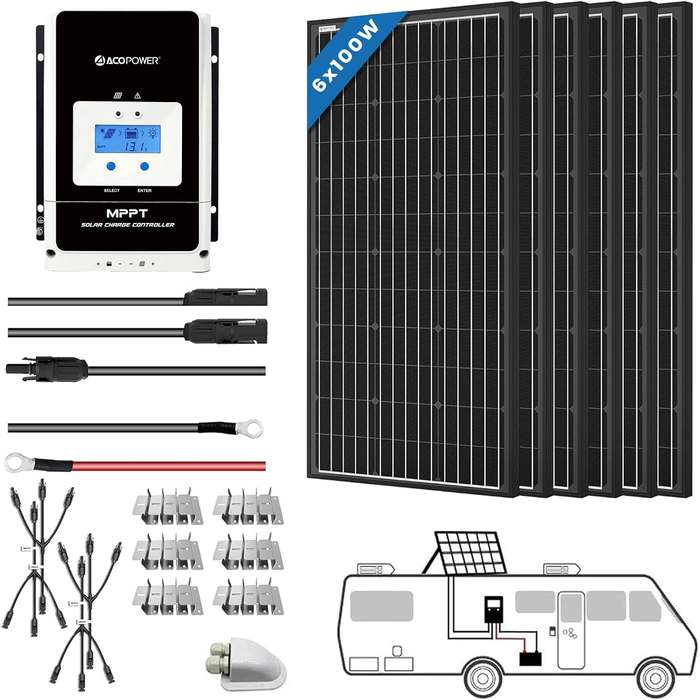
Buy it if: a complete 600W roof kit with a bigger controller than most: the 50A MPPT and full wiring kit mean one box, one install, no extra parts runs.
Skip it if: you want the absolute cheapest 600W; check the live price against the Renogy before buying. Or if you prefer bifacial or flexible panels.
Strengths
Trade-offs
600W you can fold up and carry: the portable pick, full stop.
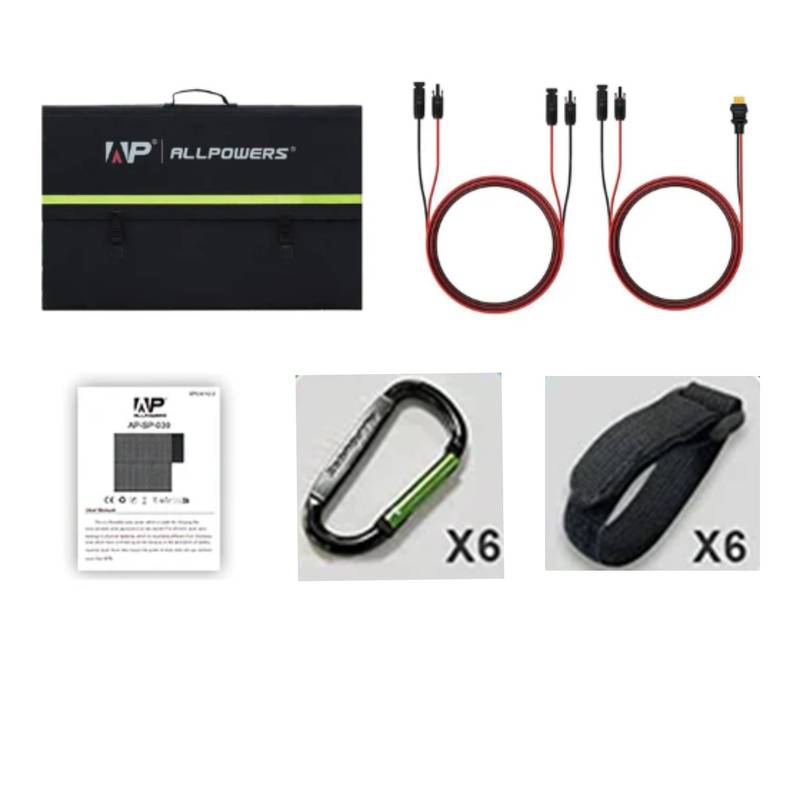
Buy it if: portable power: unfold at camp, feed a power station or battery bank, fold it away when you roll. No roof install needed.
Skip it if: you want a permanent roof array; foldables trade long-term durability for portability.
Strengths
Trade-offs
The cheapest verified path to 600W, and the only one that bends.
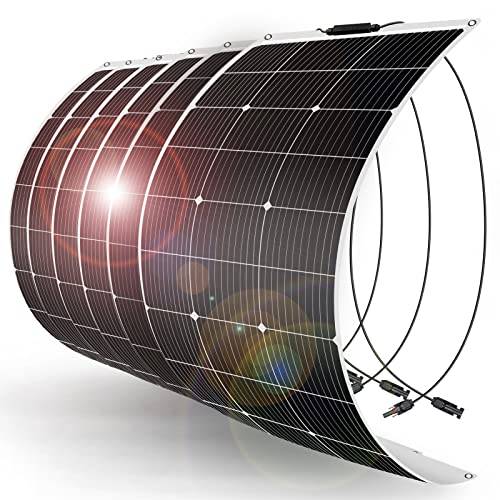
Buy it if: curved or uneven RV roofs where rigid panels won't sit flat, and rigs where every pound matters.
Skip it if: you have a flat roof and want maximum lifespan; rigid panels run cooler and last longer.
Strengths
Trade-offs
Two big bifacial panels for RVers who chase every watt.
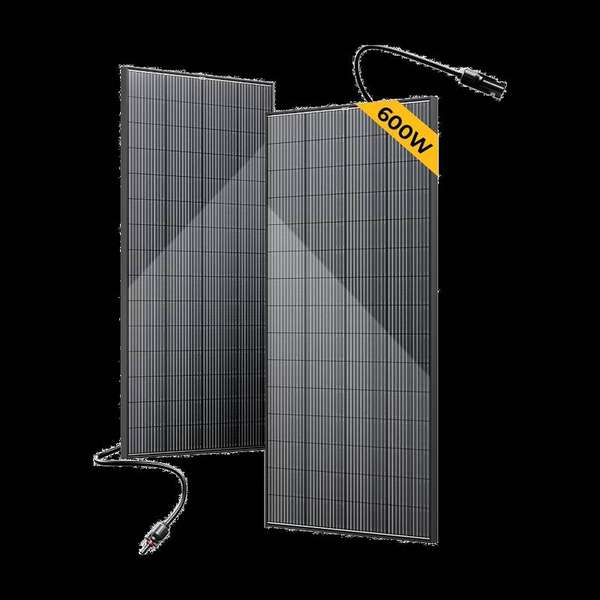
Buy it if: RVers who can tilt or elevate panels: bifacial rear-side gain adds real watts when light reflects underneath.
Skip it if: your panels will lie flat on a dark rubber roof; bifacial gain needs reflected light to matter.
Strengths
Trade-offs
For spec-sheet shoppers: everything documented, nothing guessed.
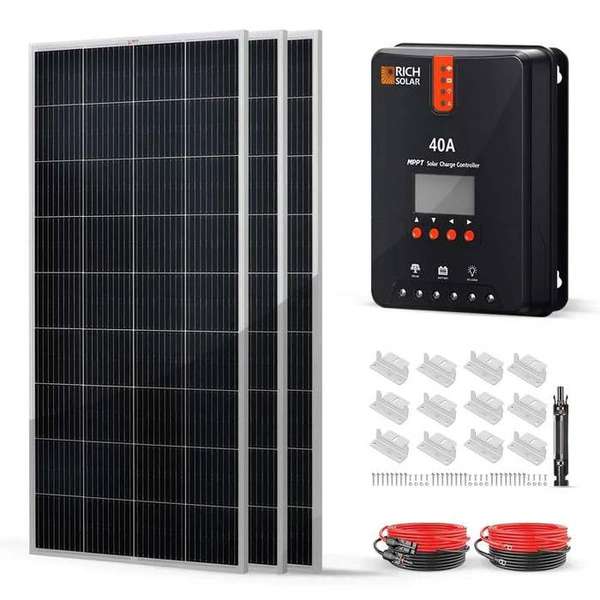
Buy it if: buyers who want full published electrical specs before spending: Rich Solar documents everything down to wire gauges.
Skip it if: you buy only direct from manufacturers; richsolar.com was redesigned and the 600W page now lives with dealers and Amazon.
Strengths
Trade-offs
Remaining stock, real bargain: Bluetooth MPPT and full cables included.
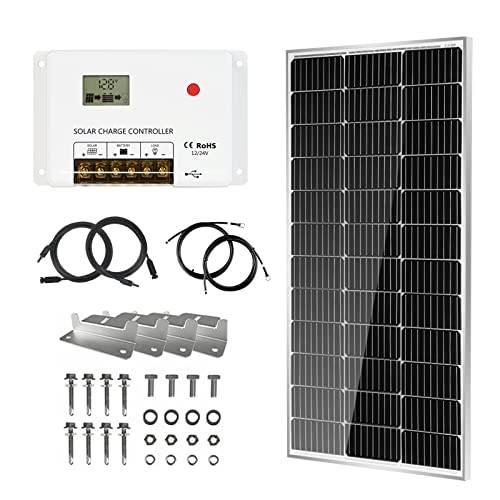
Buy it if: a bargain on remaining stock: the kit contents (Bluetooth MPPT, temp sensor, full cable set) punch above the price.
Skip it if: you want active manufacturer support; HQST retired this kit from its own site.
Strengths
Trade-offs
The 60A MPPT is the headline; the panels are standard rigid fare.
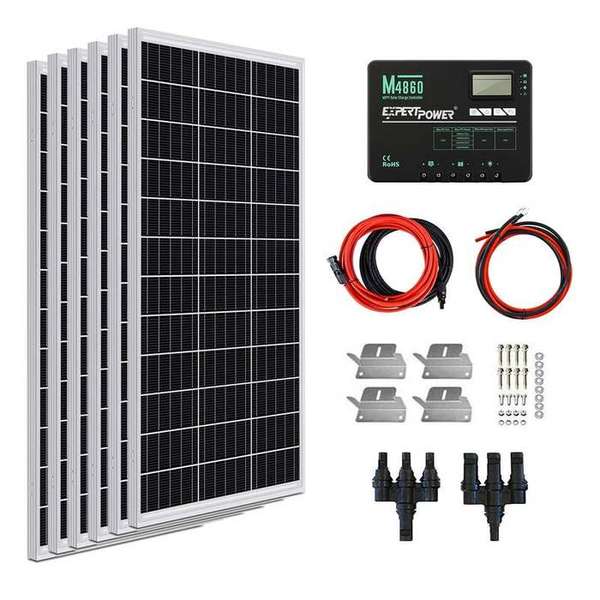
Buy it if: shoppers who want the 60A MPPT variant; the panel hardware is standard rigid 100W fare.
Skip it if: you need deep published specs; efficiency, dimensions, and weight aren't on both sources.
Strengths
Trade-offs
N-type efficiency with a clean three-panel roof layout.
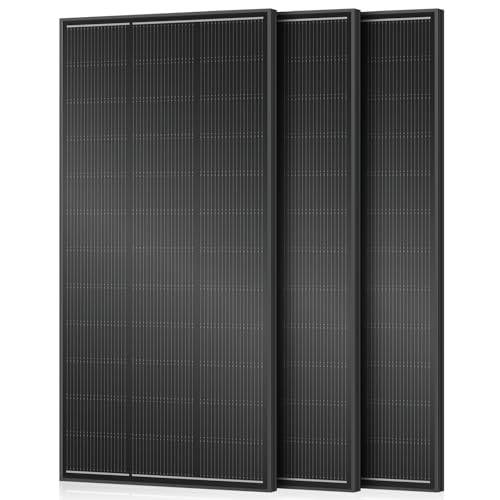
Buy it if: maximum efficiency per dollar with a simple three-panel roof layout; N-type cells degrade slower than P-type.
Skip it if: brand support matters to you; no manufacturer website could be found, so support runs through the Amazon seller.
Strengths
Trade-offs
Six small panels that tile around every roof obstacle.
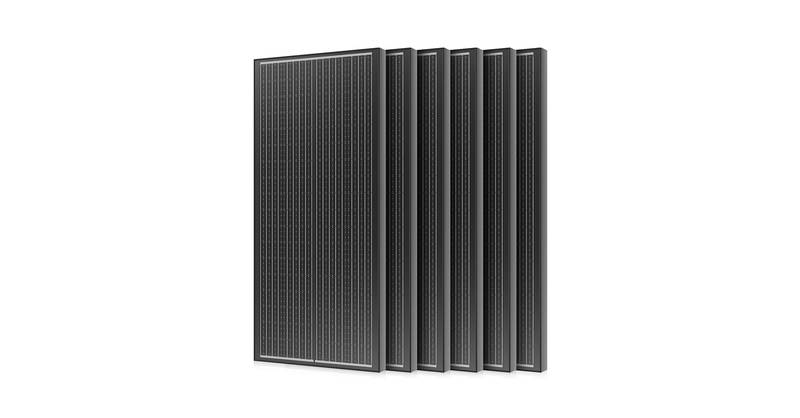
Buy it if: roofs chopped up by vents, skylights, and AC units: six small 100W panels tile around obstacles where big panels can't.
Skip it if: you have wide open roof space; fewer, larger panels mean less wiring for the same 600W.
Strengths
Trade-offs
The installed-grade system for buyers who want dealer support, not DIY.
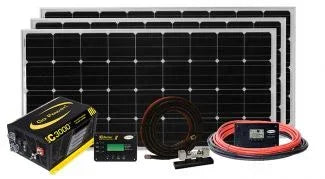
Buy it if: the buyer who wants one installed-grade system from an RV-native brand (Dometic) with dealer support, not a parts list to assemble.
Skip it if: you're price-sensitive or want MPPT; at this price a PWM controller is the spec-sheet compromise.
Strengths
Trade-offs
Bifacial watts on a budget: buy two, tilt them, harvest the reflection (verify specs carefully).
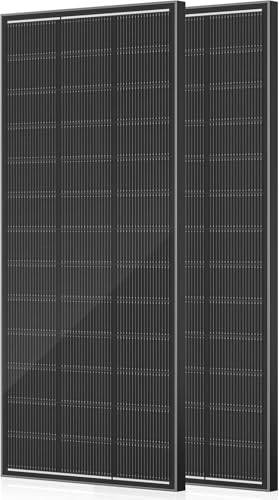
Buy it if: bifacial output on a budget: buy two 300W panels for a 600W pair, tilt them, and harvest reflected light.
Skip it if: you need a kit; these are panels only, and there's no manufacturer site behind the brand.
Strengths
Trade-offs
600W of panels produces roughly 1,800 to 2,400 watt-hours per day under favorable conditions. This is an illustrative estimate, not a guarantee. The calculation is: Daily energy (Wh) = 600W x peak sun hours x system performance factor. Using 4-5 peak sun hours and a 0.75 performance factor (accounting for temperature, wiring, controller, and soiling losses): 600 x 4 x 0.75 = 1,800 Wh; 600 x 5 x 0.75 = 2,250 Wh. Actual output varies with location, season, shade, roof angle, panel temperature, and system losses. A 12V fridge (600-900 Wh/day) plus lights, fans, and devices (~600 Wh) totals around 1,200-1,500 Wh, which fits comfortably. But running a microwave (1,500W for 5 minutes = 125 Wh) or coffee maker (1,000W for 10 minutes = 167 Wh) draws from battery capacity, not directly from the panels.
On a 12V battery bank, 600W of panels produces about 41.7 amps of charging current at typical lithium charging voltage (600W / 14.4V = 41.7A). But controller sizing is not just about amps: you must also check the controller's maximum PV input wattage and voltage. For example, the ACOPOWER 50A MPPT allows 625W max on 12V, so a 600W array uses 96% of its capacity with no room for expansion. The Renogy 60A allows 800W on 12V, leaving headroom. Always check both the amp rating AND the max PV input watts in the controller's manual. For panel-only picks in this guide, you will need to buy a separate MPPT controller rated for your array's voltage and wattage.
Six 100W panels tile around vents and AC units. Four 150W panels split the difference. Three 200W or two 300W panels mean less wiring and fewer roof penetrations, but each panel is bigger and heavier. Measure your clear, shade-free roof space first, then choose the layout that fits. A perfect 600W kit that doesn't fit your roof is worth nothing.
Rigid glass panels last the longest, run coolest, and carry 25-year warranties. Flexible panels suit curved roofs and weight-critical rigs but degrade faster. Foldable panels are for portable use with power stations, not permanent installs. Match the panel type to how you'll actually use it.
Panels are half the story. Battery sizing depends on your daily consumption, not just panel wattage. Here is a worked example: if you use 1,500 Wh per day and want one day of autonomy with lithium (usable to 90% depth of discharge), you need 1,500 / 0.9 = 1,667 Wh of battery, which is 1,667 / 12.8V = 130Ah at 12V. For two days of autonomy or cloudy-day buffer, double it to ~260Ah. Most RVers with 600W of solar land between 200-400Ah of lithium, but the right size comes from your actual loads, not a rule of thumb. Run your loads through our free estimator to size precisely. You also need fuses, disconnects, and an inverter if you need AC outlets. Price the full stack before you commit to a panel pick; the cheapest panels with the most expensive supporting parts rarely win.
A 600W array typically produces 1,800 to 2,400 watt-hours per day in good sun: lights, vent fans, device charging, a 12V fridge, and a laptop or TV for hours. Short bursts of microwave or coffee maker are fine; all-day air conditioning is not.
For most weekend and week-long boondocking trips, yes, paired with 200 to 400Ah of lithium. Full-timers running AC or heavy remote-work loads usually step up to 800W or more.
Plan 200Ah of lithium as a practical minimum, 300 to 400Ah if you run an inverter regularly. With lead-acid, double the rated amp-hours since only half the capacity is usable.
About 40 to 50 amps at peak sun (600W divided by 12 to 14 charging volts). Size your charge controller at 50A minimum, 60A for headroom.
Roughly 1,800 to 2,400 watt-hours with 4 to 5 peak sun hours. Tilted panels in the desert Southwest hit the high end; flat panels in northern winters land much lower.
Not for long. A 13,500 BTU RV AC draws 1,200 to 1,500W, draining a day's harvest in about an hour. 600W can offset AC use briefly with a soft start and big batteries, but sustained cooling needs more array or a generator.
At least 50A MPPT on 12V (600W / 12V = 50A); 60A gives comfortable headroom. On 24V, 30A MPPT suffices. Always MPPT over PWM at this size.
Usually the panels, an MPPT charge controller, mounting brackets, MC4 branch connectors, and solar cables. Batteries, inverters, and fuses are sometimes included in premium kits, often sold separately.
Panel-and-controller kits run about $650 to $1,200. Add $800 to $2,000 for lithium batteries and $300 to $800 for an inverter. Professionally installed complete systems start near $12,000.
Rigid panels last longer, run cooler, and cost less per watt with 25-year warranties. Flexible wins on curved roofs or where weight is critical, but degrades faster. For a permanent 600W roof array, rigid is the better buy for most RVers.
Common layouts: 6x100W, 4x150W, 3x200W, or 2x300W. Fewer large panels mean less wiring; smaller panels fit around vents and AC units. Measure clear roof space first.
Yes with planning: choose a 60A MPPT (handles ~800W on 12V), leave roof space, and oversize wiring. Expanding later beats replacing an undersized controller.