Westinghouse WGen9500DF
- Power (start/run)
- 12,500/9,500W
- Fuel
- Dual fuel
- Noise
- 74 dBA
- 50A outlet
- Yes, 14-50R
- Standout
- Remote start, 3-yr warranty
Generators
10 products compared · Specs verified from manufacturers + Amazon · October 2026
A 50 amp RV can pull up to 12,000 watts, and most generators sold as "RV ready" top out at 30 amps. We compared 10 generators on real 50A outlet availability, running watts, fuel type, and noise. The short answer: the Westinghouse WGen9500DF is the best 50A-outlet pick for most big rigs with dual-fuel flexibility, the Pulsar G12KBN delivers 12,000 starting watts with a 50A outlet but no CO sensor, and the Honda EU7000iS is the reliability benchmark if you can live with 30A. Before you buy anything, check the 50A outlet, not the marketing: 4 of the 10 picks here lack one. Size your power needs first.
Affiliate disclosure: RV Solar Power Guide is reader-supported. When you buy through links on this page, we may earn a commission at no extra cost to you. Our picks come from comparing verified specs and price. We don't accept payment for placement.
Top pick
Westinghouse WGen9500DF: true 50A outlet, dual fuel, 12,500W starting
Budget pick
Pulsar G12KBN: 12,000 starting watts with 50A outlet, no CO sensor
Premium pick
Honda EU7000iS: the reliability benchmark, 52 dBA at quarter load
Key spec to check
50A outlet (14-50R): 4 of 10 picks lack it, check before buying
Every pick below is measured against what a 50 amp RV actually needs: a real 14-50R outlet for direct shore-power plug compatibility, enough running watts for one or two air conditioners, and honest noise figures. Four picks top out at 30A and are here for smaller rigs and budget buyers who asked for them. Specs come from manufacturer pages and listings, checked October 2026. Note: a 14-50R receptacle means RV plug compatibility, not 50 amps of continuous output. No portable generator in this guide delivers a full 12,000W/50A continuous; the running-watts column is what your rig actually gets.
| Product | Power (start/run) | Fuel | Noise | 50A outlet | Standout | Buy |
|---|---|---|---|---|---|---|
| Top pickWestinghouse WGen9500DFRead review ↓ | 12,500/9,500W | Dual fuel | 74 dBA | Yes, 14-50R | Remote start, 3-yr warranty | Check Price |
| GENMAX GM9000iEDRead review ↓ | 9,000/7,600W | Dual fuel inverter | 62 dBA | Yes | Quietest 50A-outlet inverter | Check Price |
| Premium pickHonda EU7000iSRead review ↓ | 7,000/5,500W | Gasoline | 52/58 dBA | No, 30A max | Reliability benchmark | Check Price |
| DuroMax XP12000EHRead review ↓ | 12,000/9,500W | Dual fuel | 74 dBA | Yes | Max watts for big rigs | Check Price |
| AIVOLT 8000WRead review ↓ | 8,000/6,100W | Dual fuel inverter | 62 dBA | Yes | Lightest 50A-outlet inverter | Check Price |
| Westinghouse iGen12000DFcRead review ↓ | 12,000/9,000W | Dual fuel inverter | 64 dBA | Yes | Premium inverter muscle | Check Price |
| Budget pickPulsar G12KBNRead review ↓ | 12,000/9,500W | Dual fuel | 74 dBA | Yes | 12kW starting, no CO sensor | Check Price |
| Cummins Onan P4500iRead review ↓ | 4,500/3,700W | Gasoline | 52 dBA | No, 30A max | Whisper-quiet 30A | Check Price |
| Champion 100891Read review ↓ | 9,375/7,500W | Dual fuel | 74 dBA | No, 30A max | Dual-fuel value, 30A ceiling | Check Price |
| WEN DF680iXRead review ↓ | 6,800/5,100W | Dual fuel inverter | 64 dBA | No, 30A max | Budget quiet inverter | Check Price |
Listed best-first for 50 amp RV service. True-50A picks carry a real 14-50R outlet for a direct shore-power connection. The 30A picks are included for smaller rigs and budget buyers, clearly marked so you know the ceiling before you buy. Our method: we compared verified specs, outlet availability, noise figures, fuel flexibility, and warranty terms. No paid placements, no lab-test claims.
True 50A RV power with dual-fuel flexibility.
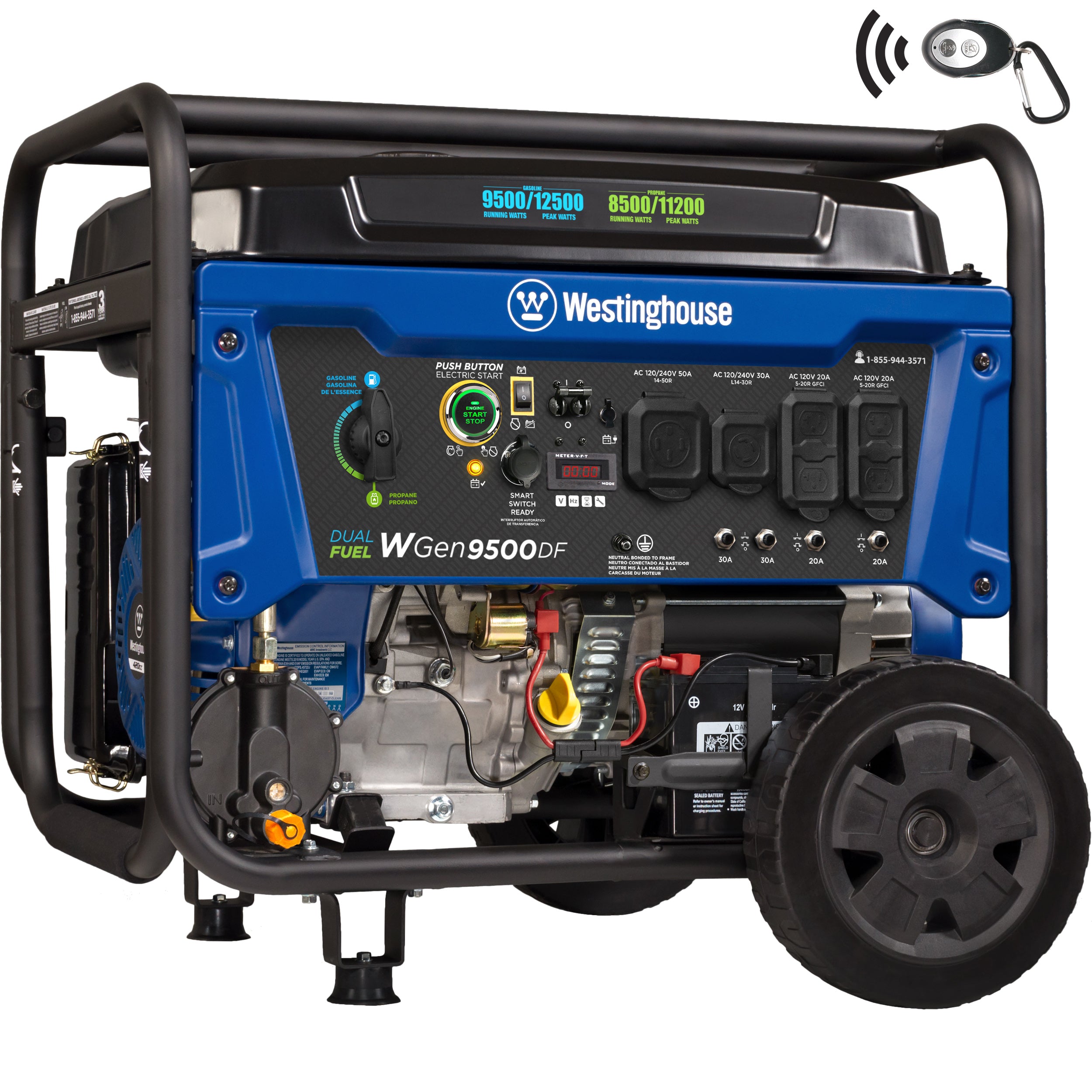
Buy it if: RV owners who want a direct 50A shore-power plug with maximum starting watts and the flexibility to run on propane.
Skip it if: you camp where noise matters (74 dBA is loud) or in California (not CARB compliant).
Strengths
Trade-offs
Quiet inverter power with a real 50A outlet.
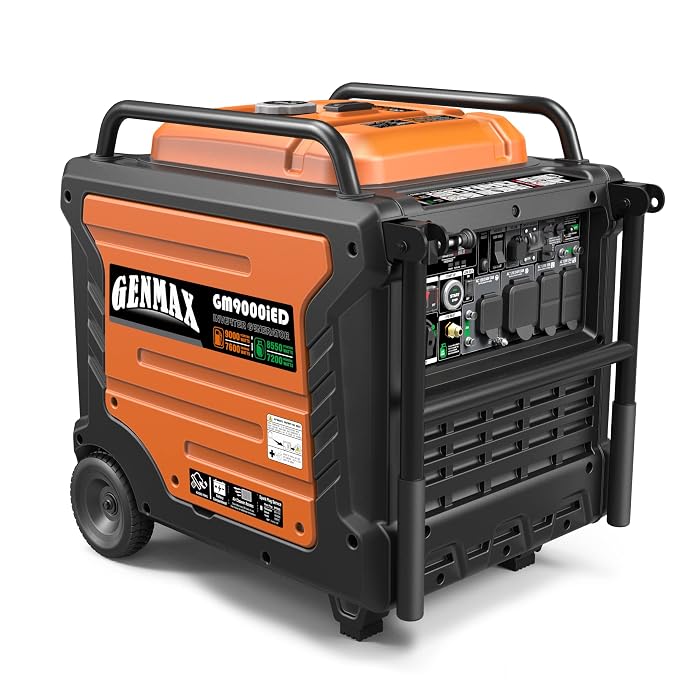
Buy it if: buyers who want inverter-clean power at 62 dBA with a true 50A outlet for sensitive RV electronics.
Skip it if: weight matters to you: 244 lbs is barely portable even with wheels.
Strengths
Trade-offs
The reliability benchmark, with one honest caveat.
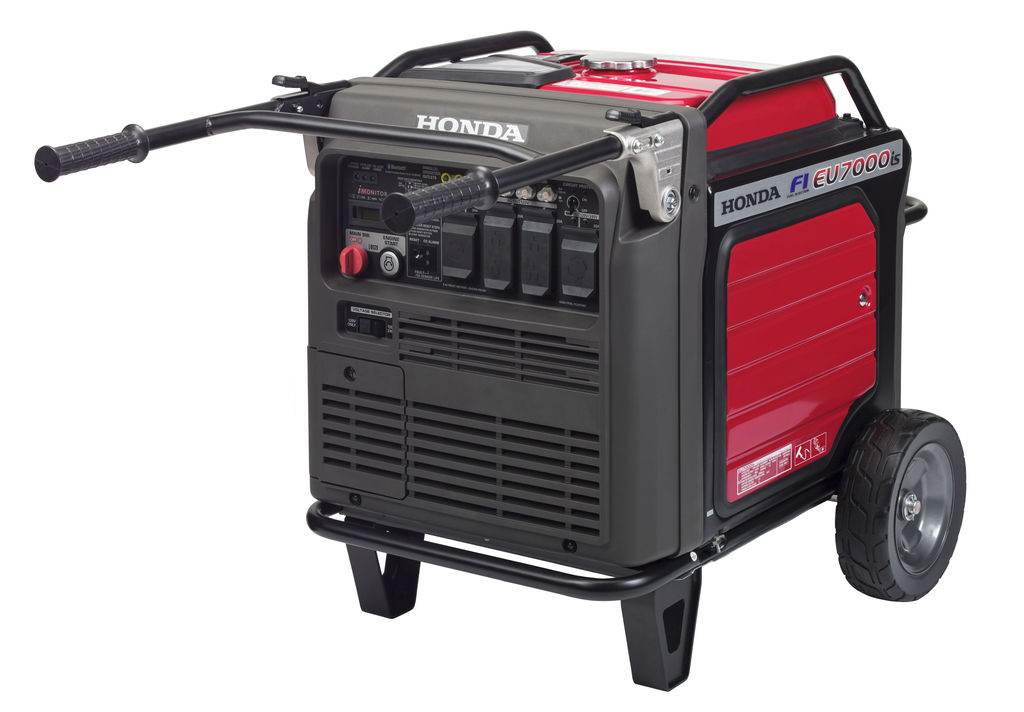
Buy it if: buyers who prioritize reliability and quiet operation above all else, and can live within 30 amps.
Skip it if: you need a true 50A outlet: this tops out at 30A, so big 50A rigs will feel the ceiling.
Strengths
Trade-offs
Maximum watts for the biggest rigs.
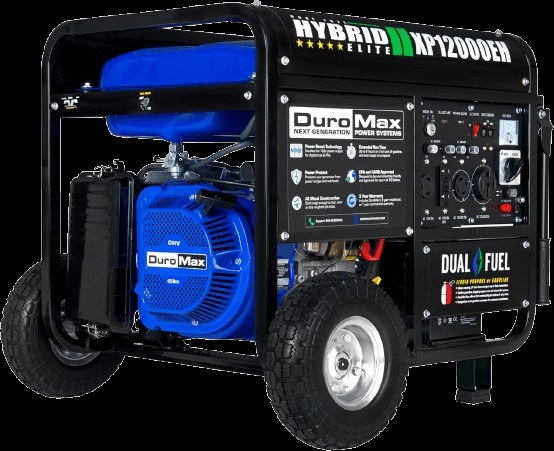
Buy it if: large fifth wheels and toy haulers that need to run two air conditioners plus everything else at once.
Skip it if: noise or weight is a concern: 74 dBA and 224 lbs is a lot of both.
Strengths
Trade-offs
Lightest 50A-outlet inverter here.
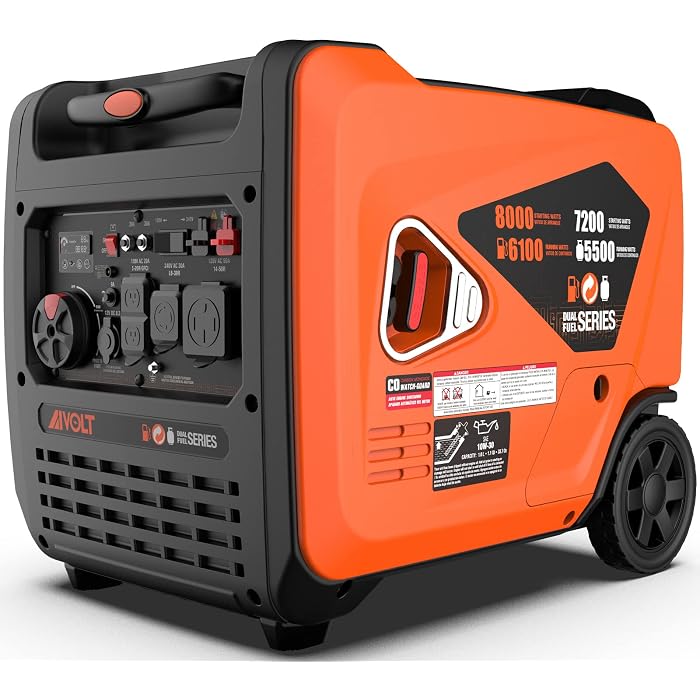
Buy it if: solo RVers who need to load and unload the generator alone but still want a real 50A outlet.
Skip it if: you want an established brand with a deep service network; AIVOLT is newer with thinner support.
Strengths
Trade-offs
Premium inverter muscle at 64 dBA.
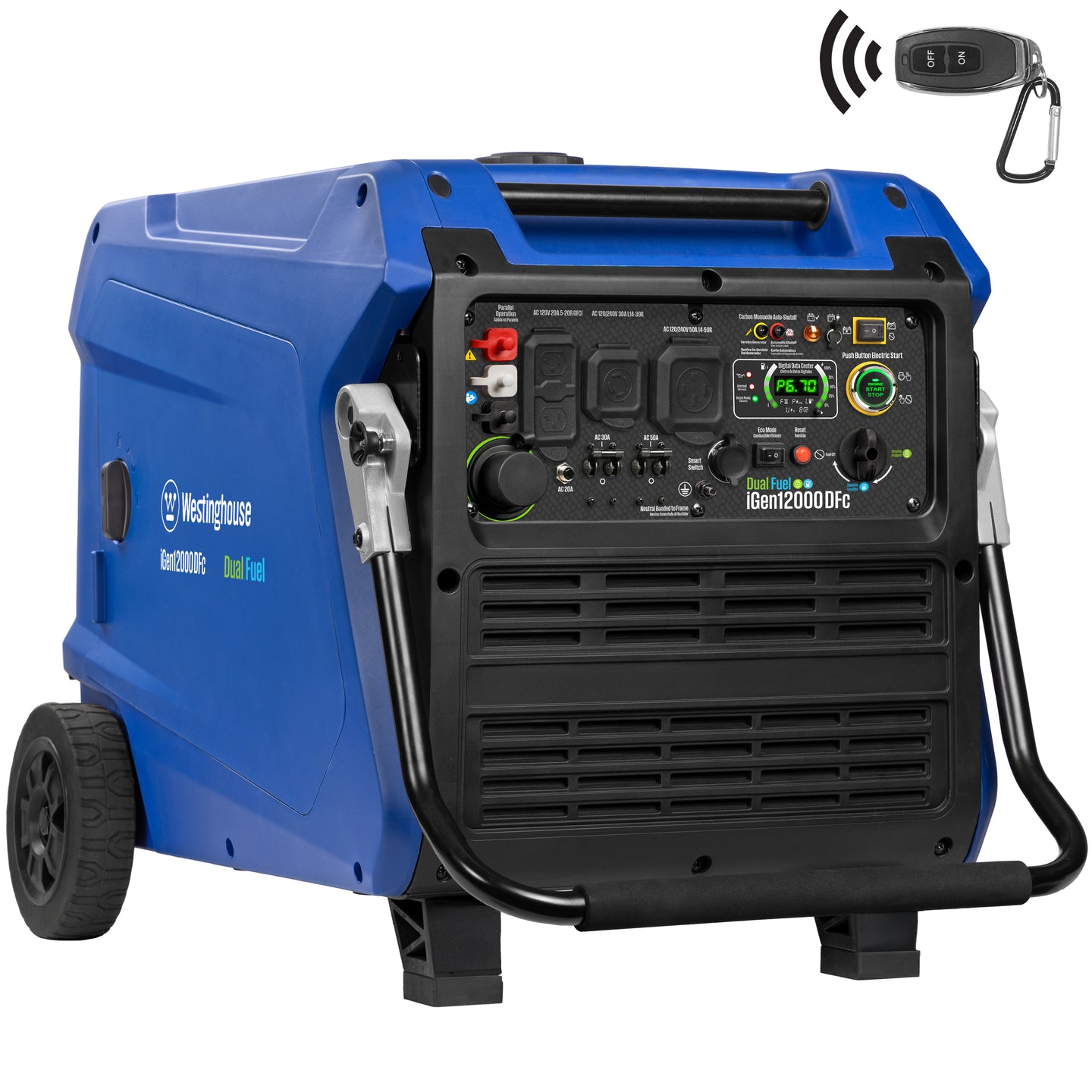
Buy it if: buyers who want maximum inverter power with remote start and clean power for the whole rig.
Skip it if: you are in California: not CARB compliant.
Strengths
Trade-offs
Big power, honest trade-offs.
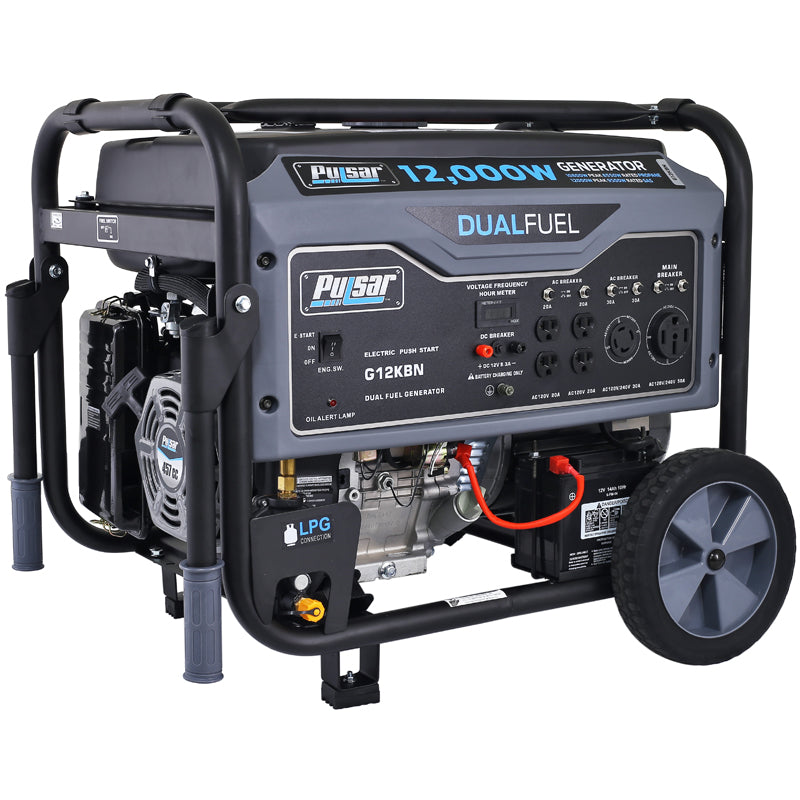
Buy it if: budget buyers who need raw 50A power and maximum starting watts in this guide.
Skip it if: noise matters to you, or you need a CO sensor: this one does not have one.
Strengths
Trade-offs
Whisper-quiet, but know its limits.
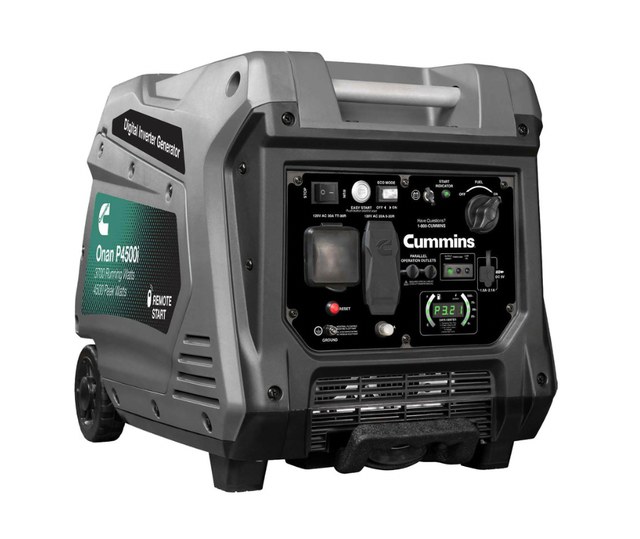
Buy it if: 30A RV owners who want whisper-quiet inverter power from the Onan name at a portable 98 lbs.
Skip it if: you need true 50A service: this is a 30A generator, full stop.
Strengths
Trade-offs
Solid dual-fuel value, 30A ceiling.
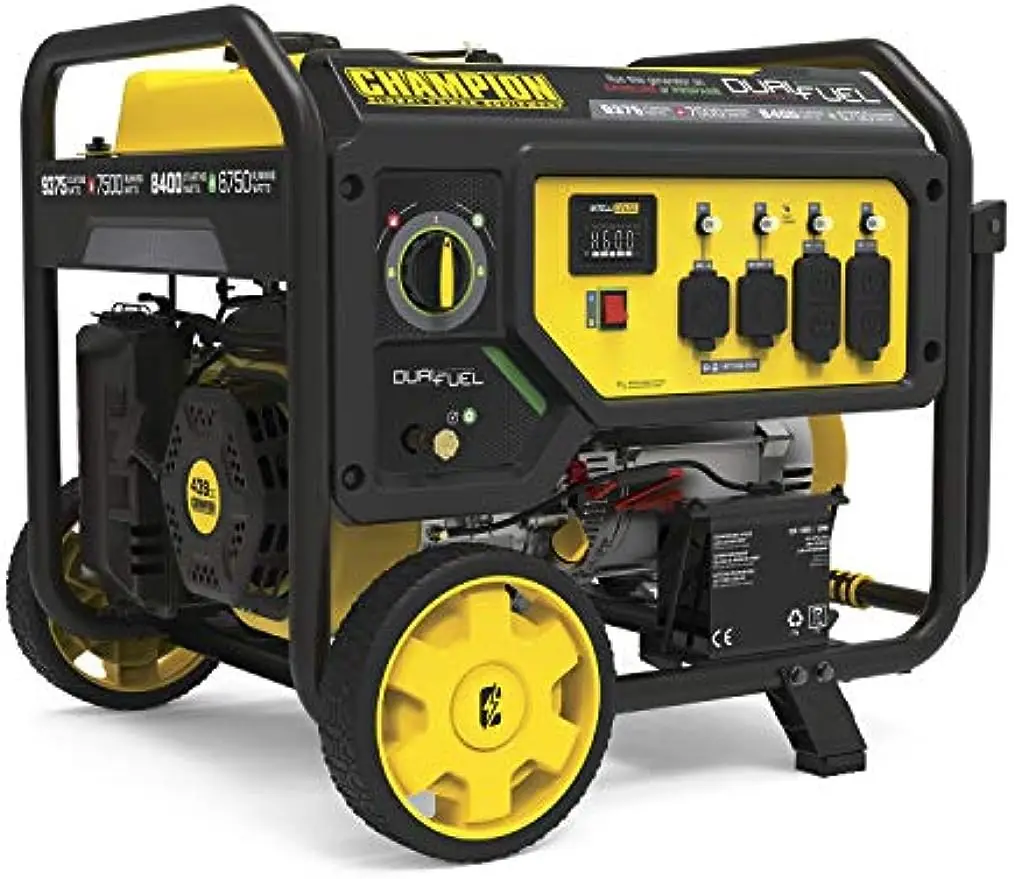
Buy it if: budget home backup and 30A RV use where 7,500 running watts covers the load.
Skip it if: you need a 50A RV outlet: this one tops out at 30A.
Strengths
Trade-offs
Budget inverter, honest 30A.
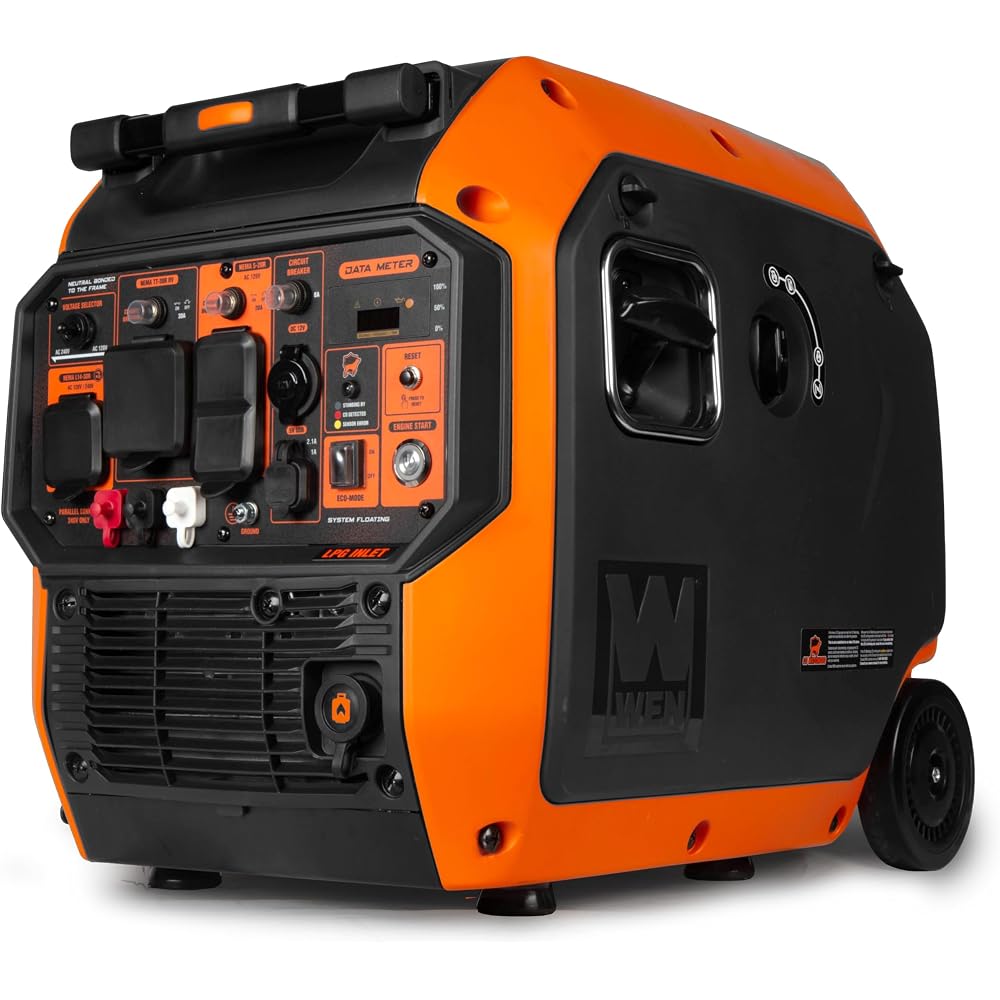
Buy it if: budget buyers who want quiet inverter power for smaller rigs and are fine with 30A.
Skip it if: you need 50A: 5,100 running watts and a 30A ceiling will not feed a big rig.
Strengths
Trade-offs
A 50 amp RV inlet (14-50R) is two separate 120V legs delivering up to 12,000W combined. Most 50A rigs never pull that much at once: one 15,000 BTU air conditioner draws about 1,800W running, two draw 3,600W, and the water heater, microwave, and converter add a few thousand more. Realistically, 7,500 to 9,500 running watts covers nearly every 50A rig; 9,000+ running watts covers two ACs running together. Run your loads through our free estimator before you size up.
Inverter generators throttle their engines to match the load, so they run at 52 to 64 dBA and produce clean sine-wave power safe for laptops, TVs, and RV control boards. Conventional generators run full-tilt at a fixed RPM: louder (around 74 dBA) with choppier power, but far cheaper per watt. If you camp near others or run sensitive electronics, inverter wins. If you need 12,000 starting watts on a budget and camp where noise rules are loose, conventional is honest value.
Propane never goes stale, needs no stabilizer, and you already carry it in the RV. Gasoline packs more energy per gallon but gums up carburetors when it sits, which is the top cause of hard-starting generators. Expect roughly 10% less power on propane than gasoline: a 9,500W gasoline unit makes about 8,500W on propane. For seasonal RVers whose generator sits for months, dual fuel is worth it.
Add up your simultaneous loads, then add 20% headroom for startup surges. Two 15,000 BTU ACs (3,600W running, ~7,000W surge together), a microwave (1,500W), and a water heater on electric (1,400W) land around 6,500W running: a 9,000W-class generator handles it. One AC plus basics fits in 5,500 to 7,500 running watts. Do not buy by starting watts alone; running watts is the number that feeds your rig all day.
Many "RV ready" generators top out at a 30A twist-lock or TT-30R outlet. Without a 14-50R 50A receptacle, you are adapting down to 30A no matter what the wattage sticker says. Four of the ten picks in this guide lack a 50A outlet and are marked clearly. If your rig has a 50A inlet and you want full power without adapters, filter for the 14-50R first and watts second. Even with a 14-50R outlet, check the running watts: a 9,500W generator delivers about 39.6 amps at 240V, not 50. The outlet type gets your shore cord plugged in; the wattage decides what you can run.
Portable generators produce carbon monoxide (CO), an odorless gas that can kill in minutes. Always operate your generator outdoors, at least 20 feet from your RV, with the exhaust pointed away from windows, doors, and vents. Never run a generator inside an RV, in a garage, or under an awning, even with the sides open. A CO sensor is a backup safety device, not a license to bend these rules: several picks in this guide (including the top pick) do not have one. Install battery-powered CO alarms inside your RV and test them before every trip. For connecting to your RV's electrical system, use the generator's built-in outlets with a proper shore-power cord; never backfeed through a household outlet. If you want a permanent home backup connection, have a licensed electrician install a transfer switch.
Most 50A rigs run fine on 7,500 to 9,500 running watts. For two 15,000 BTU air conditioners plus microwave and water heater, aim for 9,000 running watts or more. Single-AC 50A rigs are comfortable around 7,500 running watts.
30 amp service is one 120V leg delivering 3,600W max. 50 amp service is two 120V legs (split-phase) delivering up to 12,000W. A 50A rig needs a generator with a 14-50R outlet for full power; without one you adapt down to 30A.
Yes with a dogbone adapter, but you only get 30 amps (3,600W): one air conditioner and basics, not two ACs. It works as a stopgap, not as a substitute for a generator with a 50A outlet.
Every 10 dB roughly doubles perceived loudness, so a 74 dBA unit sounds about twice as loud as a 64 dBA one. For campgrounds with quiet hours, the 52 to 64 dBA inverter picks are the neighbor-friendly choice.
Inverter generators are quieter (52 to 64 dBA), fuel-efficient, and produce clean power safe for electronics. Conventional units cost less per watt with huge starting watts but run around 74 dBA. For camping near others, inverter wins; for max watts on a budget, conventional is honest value.
For most RVers, yes. Propane stores indefinitely, burns cleaner, and you already carry it. The trade is about 10% less power on propane versus gasoline. If your generator sits for months between trips, dual fuel earns its keep.
Paralleling adds watts but does not automatically create 50A split-phase service. Two paralleled 30A inverters give more 120V power on one leg. True 50A output from paralleled units needs a parallel kit designed for it, which only some brands offer.
CARB is the California Air Resources Board. Compliant generators meet California emissions standards and can be sold and operated there. Non-CARB models cannot ship to California addresses. Check compliance if you live in or travel through California.
Inverter generators at quarter load can run 8 to 18 hours on a tank. Conventional units at half load typically run 8 to 12 hours. Running two air conditioners at full tilt drains any portable tank much faster.
Yes. CO is odorless and deadly. Never run a generator inside the RV or near open windows and vents. Place it downwind at least 20 feet from the rig. Models with automatic CO shutoff add a real safety margin.
Propane wins: it never goes stale and needs no stabilizer. Gasoline degrades in 3 to 6 months without stabilizer and gums up carburetors, the top cause of hard-starting generators.
Change oil after break-in then every 50 to 100 hours, clean the air filter seasonally, check the spark plug yearly, and exercise the generator under load 20 to 30 minutes monthly. Drain or stabilize fuel before long storage.