Renogy 100W x10
- Configuration
- 10x100W
- Controller
- None (panel only)
- Max PV Input
- Needs 80A+ MPPT
- Kit Type
- Panel only
- Standout
- Buy 10 panels
Solar Kits
6 products compared · Specs verified from manufacturers + Amazon · October 2026
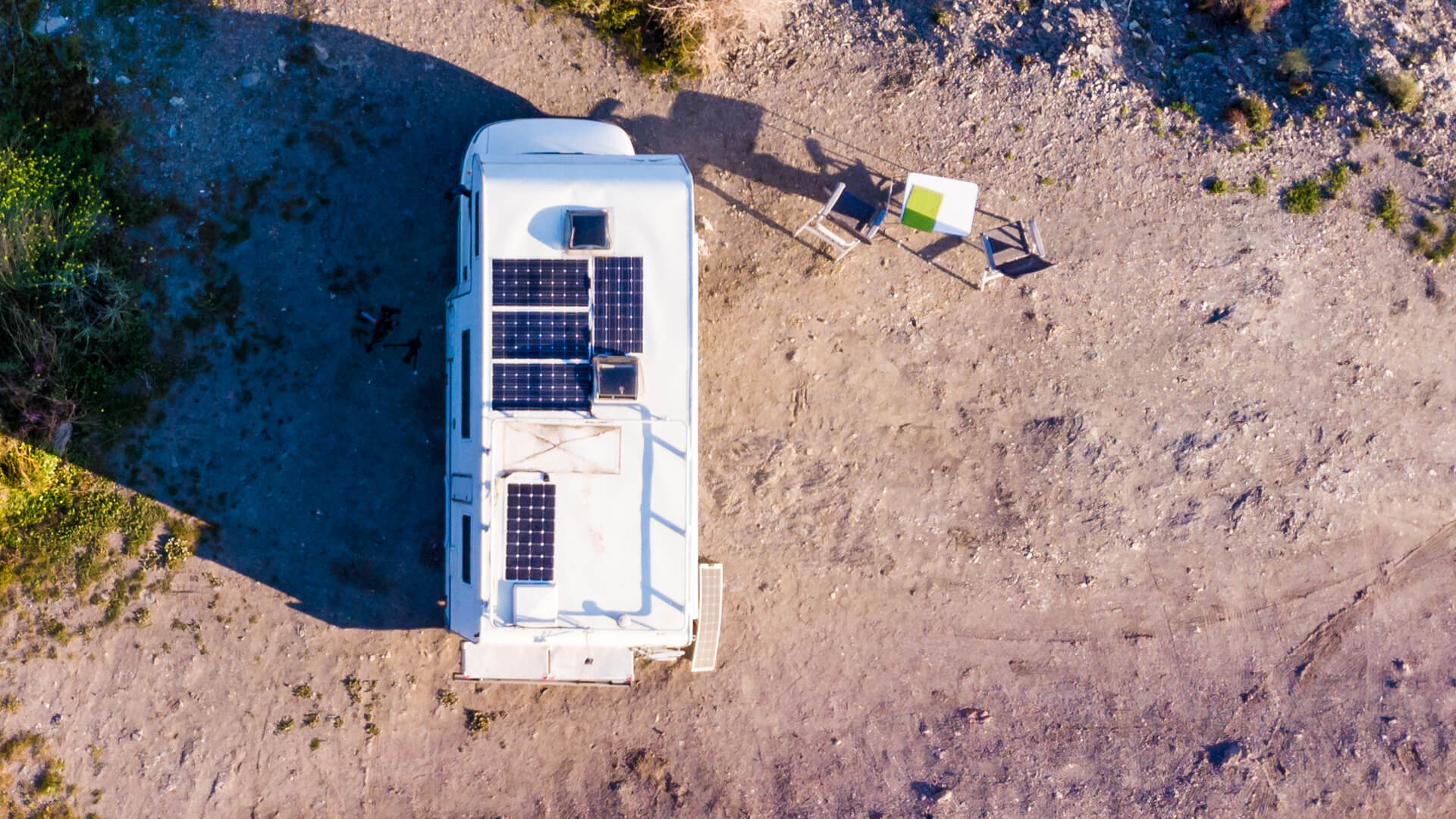
1000 watts is where RV solar gets serious: enough daily energy for full-time off-grid living, a big lithium bank, and real inverter use. We compared 6 ways to reach 1000W on an RV roof using verified panel specs. Honest framing: five of the six are panel-only (no controller included). The short answer: ten Renogy 100W panels are the best-documented DIY path, the ECO-WORTHY 10-pack is the budget way in, and the HQST and Newpowa bundles suit builders who already own a controller. Only ExpertPower sells a true complete kit, direct from the manufacturer.Size your system first.
Affiliate disclosure: RV Solar Power Guide is reader-supported. When you buy through links on this page, we may earn a commission at no extra cost to you. Our picks come from comparing verified specs and price. We don't accept payment for placement.
Top pick
Renogy RNG-100D x10: verified specs, 25-yr warranty, pair with own 80A+ MPPT
Budget pick
ECO-WORTHY 10x100W bundle: lowest-priced verified 1000W panel set
Key spec to check
Controller amperage: 1000W needs ~70A+ MPPT on 12V, 40A on 24V
Every pick below reaches 1000W: ten 100W panels or five 200W panels. Panel specs come from manufacturer pages and Amazon listings, checked October 2026. Five of six are panel-only: you buy the panels here and add your own MPPT controller, wiring, and mounts. Only ExpertPower bundles a controller, sold direct. You will need to add an MPPT controller rated for the array, plus wiring, fuses, and mounting hardware. Controller sizing for 1000W: on a 12V battery bank, 1000W produces about 69 amps of charging current at typical lithium charging voltage (1000W / 14.4V = 69.4A), so buy 80A minimum and prefer 100A; on 24V, a 40A MPPT is enough.
| Product | Configuration | Controller | Max PV Input | Kit Type | Standout | Buy |
|---|---|---|---|---|---|---|
| Top pickRenogy 100W x10Read review ↓ | 10x100W | None (panel only) | Needs 80A+ MPPT | Panel only | Buy 10 panels | Check Price |
| Budget pickECO-WORTHY 1000W KitRead review ↓ | 10x100W | Not included | Needs 80A+ MPPT | Panel only | Budget entry point | Check Price |
| ExpertPower 1000W KitRead review ↓ | 10x100W | 100A MPPT* | See listing | Complete kit | High-amp controller | Check Price |
| Rich Solar 200W x5Read review ↓ | 5x200W | None (panel only) | Needs 80A+ MPPT | Panel only | Buy 5 panels | Check Price |
| HQST 1000W BundleRead review ↓ | 10x100W | None (panel only) | Needs 80A+ MPPT | Panel only | Bring your own controller | Check Price |
| Newpowa 100W x10Read review ↓ | 10x100W | None (panel only) | Needs 80A+ MPPT | Panel only | Budget DIY panels | Check Price |
Listed best-first for RV roof installs. Panel-only picks need a separate charge controller; kit picks include one. Our method: we compared verified specs, kit completeness, controller quality, warranty terms, and roof-fit practicality. No paid placements, no lab-test claims.
The 100W benchmark panel, buy ten for a 1000W DIY array.
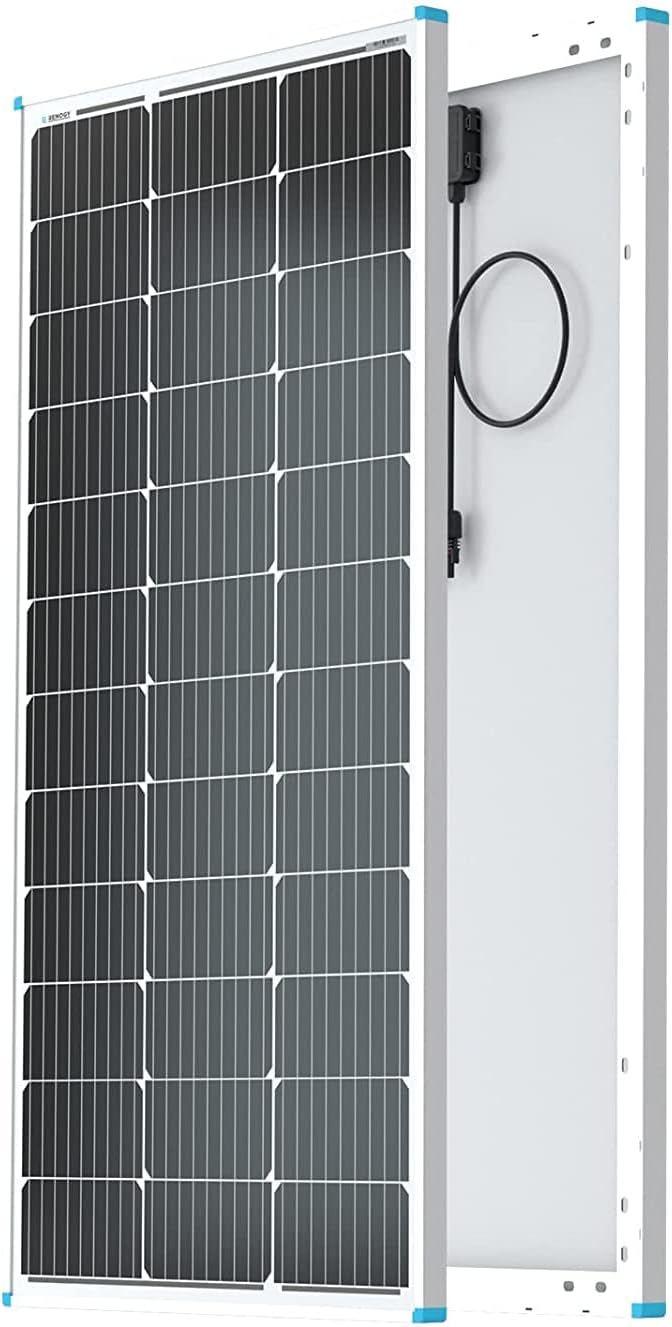
Buy it if: DIY builders who want the most trusted 100W panel and will buy their own MPPT controller. Ten Renogy 100W panels tile around roof obstacles better than five big panels.
Skip it if: you want a complete kit in one box; this is panels only and you must size and buy everything else.
Strengths
Trade-offs
Budget-friendly 1000W entry point.
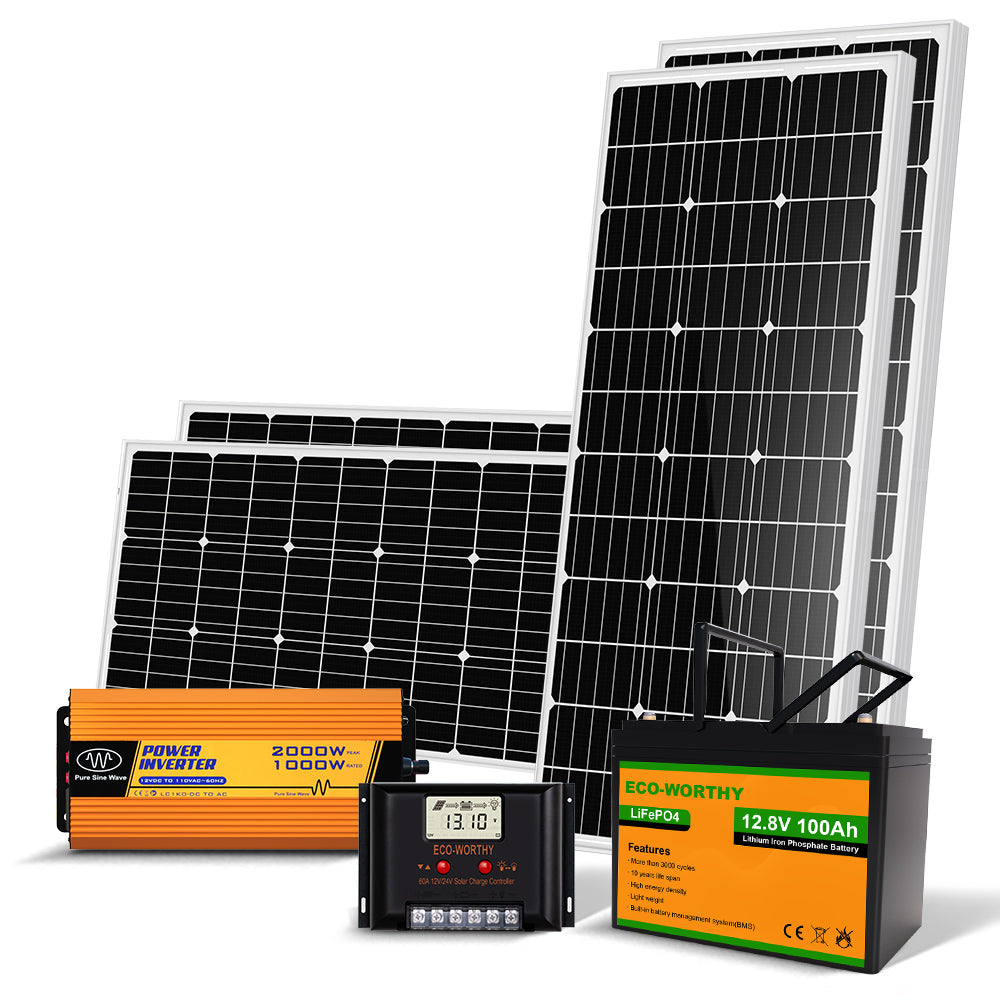
Buy it if: the budget buyer who wants the cheapest verified 1000W panel bundle and already owns or will buy a separate MPPT controller.
Skip it if: you need a complete kit with controller included; add the controller cost before comparing prices.
Strengths
Trade-offs
High-amp controller for expansion, sold direct.
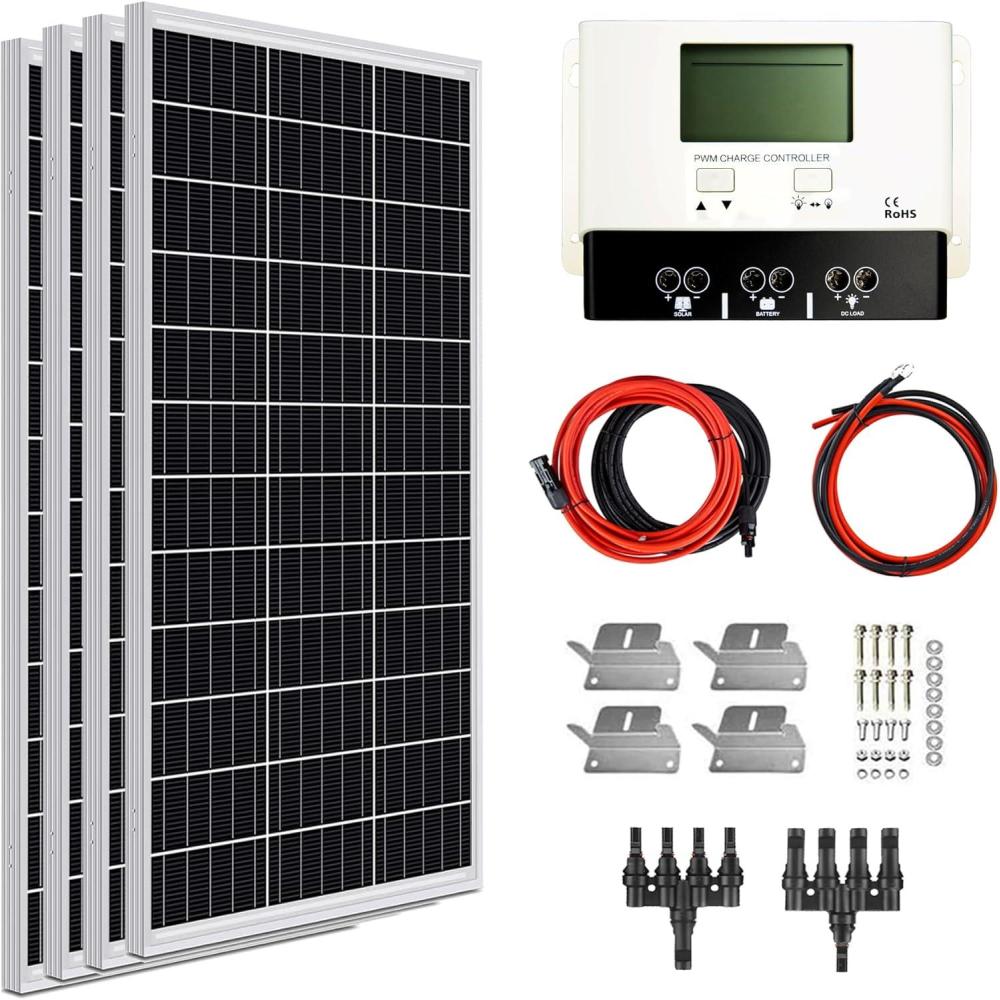
Buy it if: buyers who want a high-amp MPPT controller with room to grow past 1000W later and are comfortable ordering direct.
Skip it if: you need independently verified specs; we could not confirm the controller model or bundle contents from a third-party listing.
Strengths
Trade-offs
Fewer panels, less roof clutter.
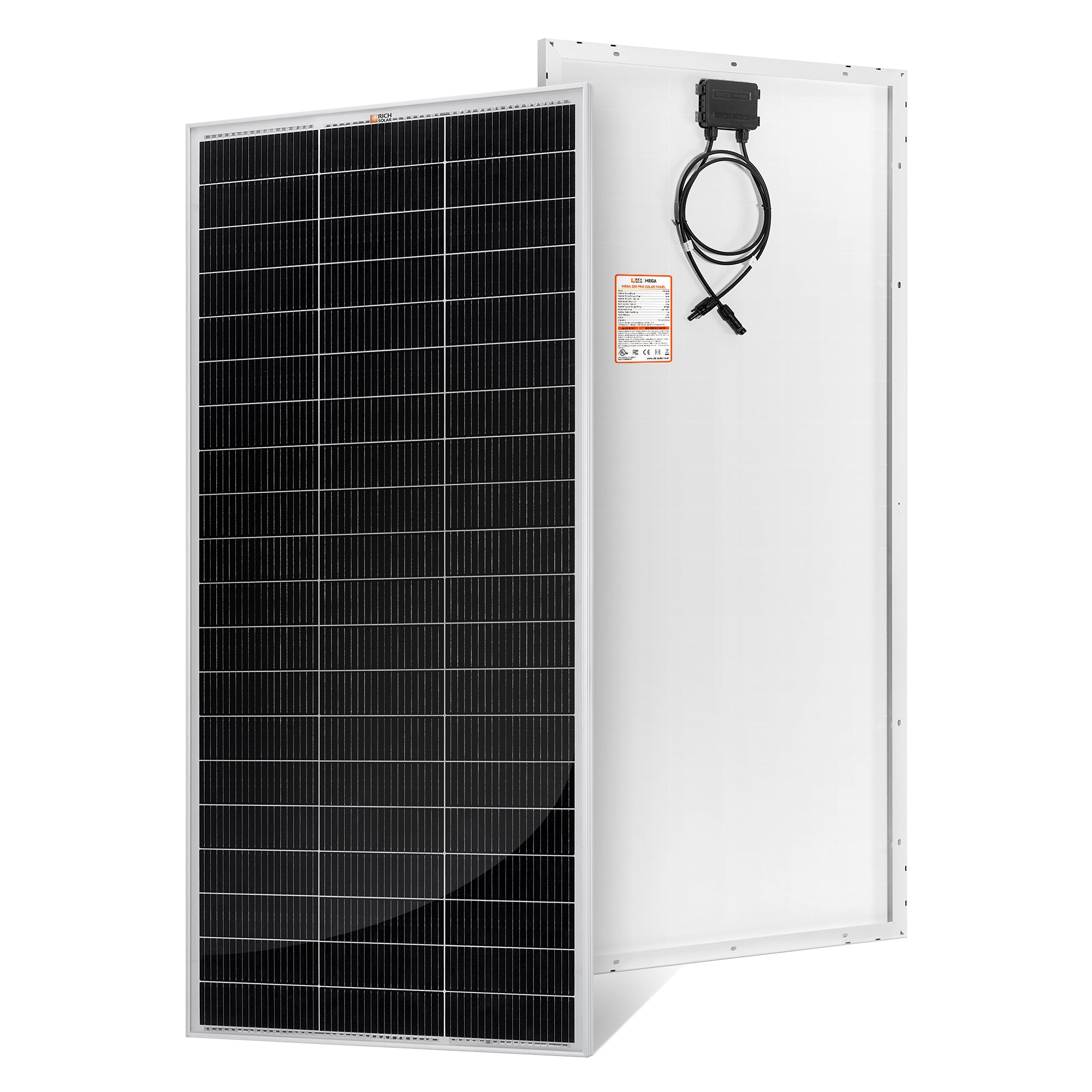
Buy it if: open roofs where five large panels fit cleanly: less wiring, fewer penetrations, faster install than ten small panels.
Skip it if: your roof is broken up by vents and skylights; big 200W panels need long clear runs. Also panels only, not a kit.
Strengths
Trade-offs
Panels only, bring your own controller.
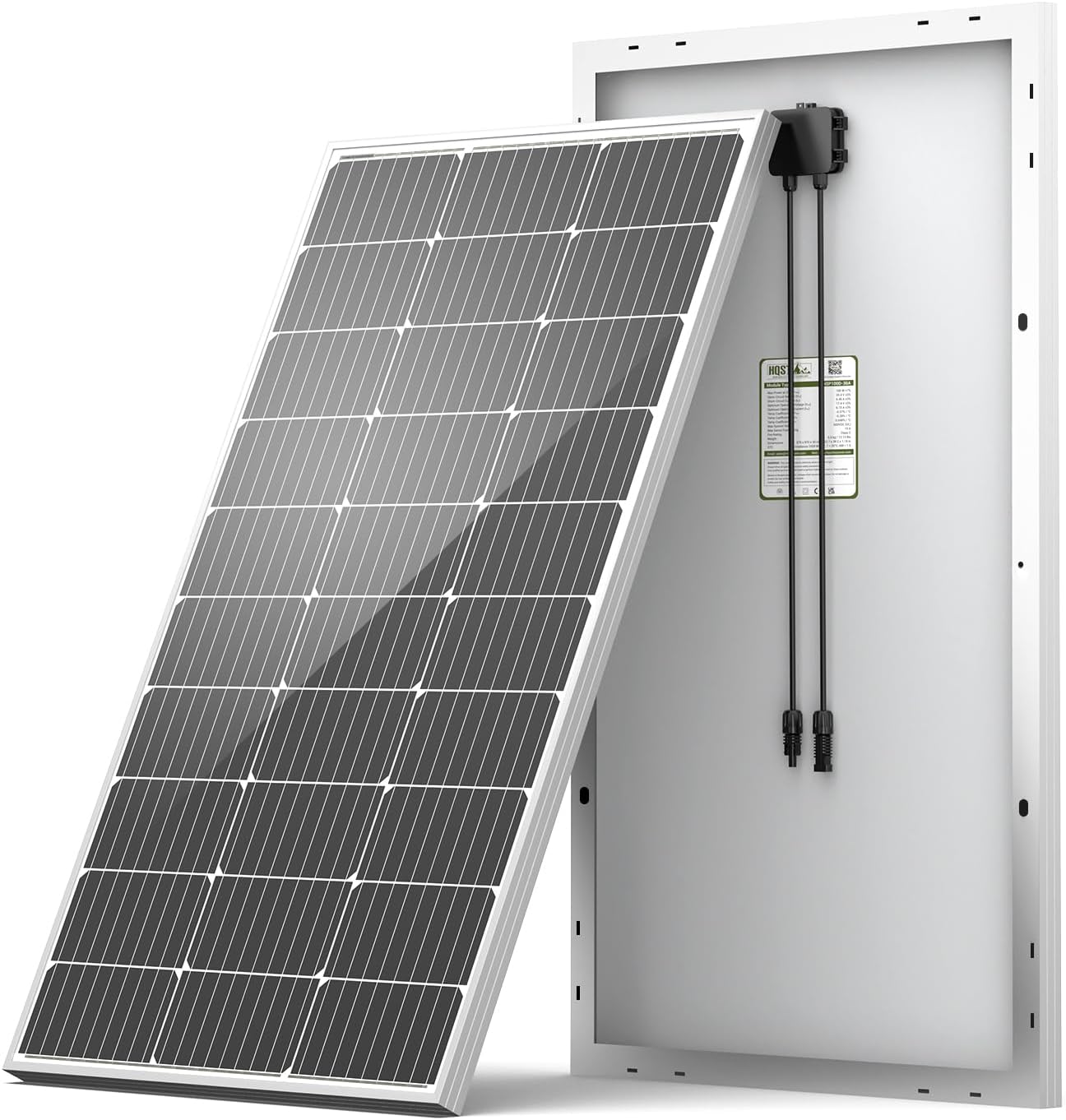
Buy it if: DIY builders who already own a big MPPT controller and want quality panels without paying for a duplicate controller.
Skip it if: you need a complete kit; by the time you add an 80A+ MPPT, wiring, and mounts, a complete kit may cost less.
Strengths
Trade-offs
Budget panels for DIY builders.
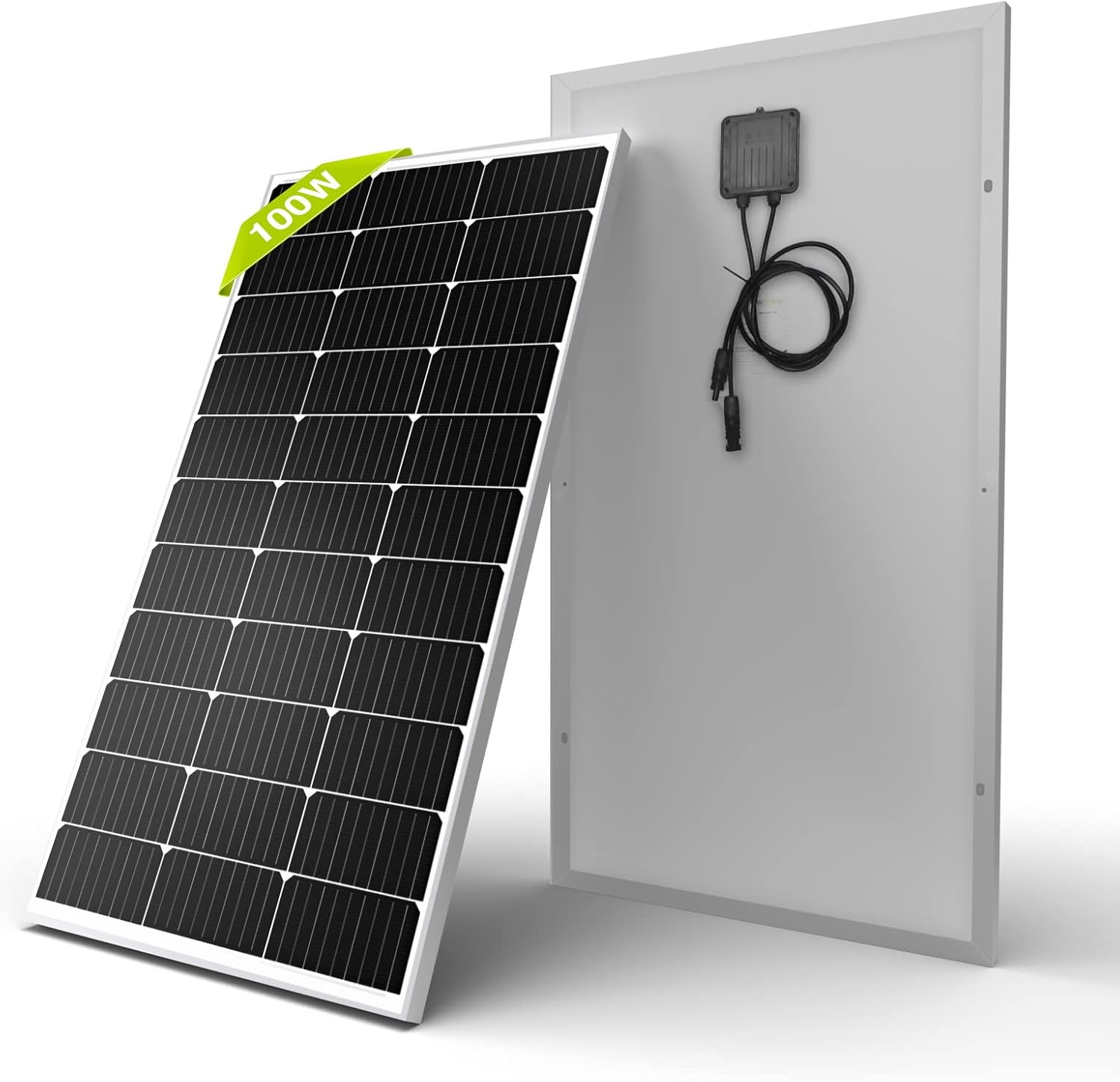
Buy it if: the DIY builder on a budget who already has a controller and wants the cheapest reputable 100W panels in bulk.
Skip it if: you need a kit; this is panels only, and the savings vanish once you buy everything else separately.
Strengths
Trade-offs
1000W of panels produces roughly 3,000 to 3,750 watt-hours per day under favorable conditions. This is an illustrative estimate, not a guarantee. The calculation is: Daily energy (Wh) = 1000W x peak sun hours x system performance factor. Using 4 to 5 peak sun hours and a 0.75 performance factor (accounting for temperature, wiring, controller, and soiling losses): 1000 x 4 x 0.75 = 3,000 Wh; 1000 x 5 x 0.75 = 3,750 Wh. Actual output varies with location, season, shade, roof angle, panel temperature, and system losses. That covers a 12V fridge (600-900 Wh/day), lights, fans, laptops, Starlink, and a TV evening with margin. But heavy inverter loads draw from battery capacity, not directly from the panels: a microwave at 1,500W for 5 minutes uses 125 Wh from the battery, and the panels refill it over time.
On a 12V battery bank, 1000W of panels produces about 69 amps of charging current at typical lithium charging voltage (1000W / 14.4V = 69.4A). Buy an 80A MPPT minimum and prefer 100A for expansion headroom. Per the Renogy Rover 100A manual, max PV input is 1300W on 12V (2600W on 24V), so a 1000W array on a 100A controller leaves about 300W of expansion room on 12V. On a 24V bank, the same array only pushes about 35A (1000W / 28.8V = 34.7A), so a 40A MPPT is enough per the same manual's 24V ratings, and battery cables can be thinner. Always confirm your specific controller's max PV volts and watts in its manual; ratings vary by brand. But controller sizing is not just amps: always check the controller's maximum PV input wattage and voltage in its manual. If you are building fresh, 24V is the smarter choice at 1000W; stick with 12V only if your RV's existing loads and wiring are already 12V.
Ten 100W panels cover about 61 to 70 square feet of actual panel area. Exact dimensions from manufacturer listings: Renogy RNG-100D is 47.0 x 21.3 inches (6.95 sq ft each, x10 = 69.5 sq ft); Newpowa 100W is 36.6 x 22.8 inches (5.8 sq ft each, x10 = 58 sq ft). Five 200W panels cover about 55 square feet: Rich Solar RS-M200 is 58.7 x 26.8 inches (10.9 sq ft each, x5 = 54.6 sq ft). But plan for roughly double that in usable roof space: 120 to 160 square feet for ten 100W panels, 85 to 110 for five 200W panels. The extra space goes to mounting clearances, wiring routes, walking access, and the roof you lose to obstacles: vents, skylights, AC units, and antennas chop the roof into odd shapes. Ten small panels tile around obstacles far better than five big ones, at the cost of more mounts and wiring. Measure your clear rectangles before choosing a layout. Leave walking paths for maintenance and keep panels away from the AC shroud's shadow. A perfect 1000W kit that does not fit your roof is worth nothing.
Three picks in this guide are panel-only bundles: the ECO-WORTHY 1000W, the HQST 1000W bundle, and the Newpowa 10-pack. They include panels and nothing else. You must add an MPPT controller (80A+ on 12V, 40A+ on 24V), solar and battery cables, fuses or breakers, MC4 branch connectors, and mounting hardware. Price the full stack before deciding: a cheap panel bundle plus a quality 100A MPPT controller and all the extras can cost as much as a complete kit. Panel-only makes sense when you already own a big controller or want to pick every component yourself. For everyone else, a complete kit is simpler and usually cheaper all-in.
For 1000W on an RV roof, series-parallel is the practical answer. Wire panels in series strings to raise the array voltage: higher voltage means lower current, thinner wire, less voltage drop, and the MPPT controller wakes up earlier in low light. Then parallel the strings to reach 1000W. Two rules: keep each string's open-circuit voltage (Voc) under the controller's maximum PV input voltage with cold-weather margin (Voc rises as temperature drops), and fuse each parallel string. For ten 100W panels on a 150V controller, a common layout is 5 series x 2 parallel. Check your controller's manual for its exact string-sizing limits.
It depends on daily use, not panel wattage. A worked example: 2,500 watt-hours per day with one day of autonomy needs about 2,778 Wh of lithium (2,500 / 0.9 depth of discharge), roughly 217Ah at 12V. Most full-time RVers with 1000W land between 300 and 400Ah of lithium.
On 12V, about 69A of charging current (1000W / 14.4V), so buy 80A MPPT minimum and prefer 100A. On 24V, about 35A, so a 40A MPPT is enough. Always MPPT over PWM at this size.
Briefly, with caveats. A 13,500 BTU AC draws 1,200 to 1,500W running with ~2,750W startup surge, so 1000W of panels offsets much of the running draw in full sun, but the battery bank and a 2000W+ inverter with strong surge rating do the real work. Sustained all-day cooling still needs more array, a generator, or shore power.
Ten 100W panels cover about 61 to 70 sq ft of panel area, but plan 120 to 160 sq ft of usable roof once you add clearances and obstacles. Five 200W panels cover about 55 sq ft, plan 85 to 110 sq ft usable. Measure around vents, AC units, and antennas first; small panels tile around obstacles better.
For many full-timers, yes: roughly 3,000 to 3,750 watt-hours per day covers a fridge, lights, fans, laptops, Starlink, and TV. Heavy inverter loads like AC or electric cooking all day will exceed it.
24V is smarter for new 1000W builds: only ~35A, so a cheaper 40A MPPT works and cables stay thin. Choose 12V only if your RV's existing 12V loads and wiring are already in place.
Roughly 3,000 to 3,750 watt-hours with 4 to 5 peak sun hours (1000W x hours x 0.75 performance factor). Location, season, shade, tilt, and temperature move the real number.
Yes with planning: a 100A MPPT on 12V handles about 1300 to 1400W, so 1000W leaves room for more panels. Leave roof space and oversize wiring. A kit maxed at its controller limit has no cheap expansion path.
Usually the panels, an 80A+ MPPT controller for 12V, mounting brackets, MC4 branch connectors, and cables. Panel-only bundles skip the controller, wiring, and mounts, so budget those separately.
Series-parallel: series strings raise voltage (thinner wire, earlier MPPT wake-up), paralleled to reach 1000W. Keep each string's Voc under the controller's max PV input with cold-weather margin, and fuse each parallel string.